
Last updated October 31, 2026
 Metal roofing
 Architectural shingles
 Tile roofing
 GAF
 Owens Corning
 Flat & low-slope
Free roof inspection with deck photos before we talk money - GAF and Owens Corning certified installation
Roofing Warning Signs: A Aliso Viejo Homeowner’s Reference Guide
Granules in the gutter aren’t the warning sign, they’re the confirmation. The actual warning sign showed up six months earlier on the shingle surface, and almost nobody looked. If you own a home in Aliso Viejo, your roof has been quietly telling you things since the day it was installed. Most guides wait until the leak is already staining the ceiling. Our Complete Guide to Roofing in Aliso Viejo is different. It’s built around the subtler, earlier signals you can catch during a 15-minute walk-around, before a $900 repair becomes a $14,000 replacement.
Styles & brands we work with
Quick Answer
The earliest roof warning signs in Aliso Viejo are granule loss visible on shingle surfaces, flashing that has begun to separate from chimneys or walls, tiles that have shifted slightly out of alignment, and attic moisture you can feel before you can see it. Catch these at the six-month mark and you’re looking at targeted repairs. Wait 24 months and the same problems become structural. The single most useful thing you can do is walk your property once a season—see our Seasonal Roofing Care for Aliso Viejo: Year-Round Homeowner’s Guide for timing—and compare what you see against the timeline below.
Table of Contents
- Early-Stage vs. Late-Stage: Why the Timing of a Warning Sign Changes Everything
- Granule Loss: The 6-Month Signal Almost Everyone Misses
- Flashing Separation: The Small Gap That Becomes a Big Leak
- Tile Slippage: What a Shifted Tile Actually Means in Aliso Viejo
- Fascia Rot: The Warning Sign Hiding in Plain Sight
- Ridge Line Sag: When the Roof’s Spine Starts to Bow
- Interior Warning Signs: What Your Attic and Ceiling Tell You First
- The Ventilation Misdiagnosis: Signs That Aren’t Actually Roof Problems
- Cosmetic, Functional, or Structural: How to Classify What You’re Seeing
- The 6-12-24 Month Timeline: What Neglect Looks Like at Each Stage
- Common Mistakes to Avoid
- When to Call a Professional
- Frequently Asked Questions
- The Bottom Line
Early-Stage vs. Late-Stage: Why the Timing of a Warning Sign Changes Everything
Here’s the thing nobody tells you about roofing failure: it’s a continuum, not an event. A roof doesn’t go from fine to failed in a weekend. It moves through recognizable stages, and each stage has a price tag attached to it. The earlier you catch a problem, the smaller and cheaper the fix.
In Aliso Viejo specifically, the timing matters more than in most climates. We get marine layer moisture in the mornings, intense UV from roughly May through October, and occasional Santa Ana wind events that test every seal and fastener on your roof. Each of these forces works on a different component. Moisture attacks wood and metal. UV breaks down asphalt shingles and rubber seals. Wind finds every loose edge and pries at it.
An early-stage signal is something you can see or feel that indicates a component is beginning to fail, but the roof’s protective function hasn’t been compromised yet. A late-stage signal means water has already found its way where it shouldn’t be, or a structural element has lost enough integrity that load-bearing capacity is in question.
Here’s the practical difference:
- Early-stage granule loss: bare spots appear on shingle surfaces. Repair cost: typically under $500 for spot work. Time to address: weeks to a few months.
- Late-stage granule loss: shingles are cracking, curling, or breaking off. Repair cost: $1,500 to $4,000 for sectional replacement. Time to address: immediately.
- Early-stage flashing separation: a small gap at the roof-to-wall junction, visible from the ground. Repair cost: $400 to $900. Time to address: before the next rain season.
- Late-stage flashing separation: water is entering the structure, insulation is wet, and drywall is staining. Repair cost: $2,000 to $6,000 plus interior work. Time to address: yesterday.
The reason we frame everything in guide as early vs. late is simple: the longer you wait, the more layers of the roof assembly get involved. What starts as a surface problem becomes a substrate problem, then a structural problem, then an interior finish problem. Each layer adds cost. The single best move you can make in Aliso Viejo is to catch things at the surface layer, starting with choosing the right roofing brand from day one.
Granule Loss: The 6-Month Signal Almost Everyone Misses
Granule loss is the most misunderstood warning sign in roofing, and it’s the one we see most often in Aliso Viejo neighborhoods like Glenwood and Westridge. Here’s what’s actually happening: the granules on an asphalt shingle aren’t decorative. They’re a UV shield. They protect the asphalt layer underneath from direct sunlight, which is what causes the asphalt to dry out, become brittle, and eventually crack.
When granules start coming off, the shingle isn’t just getting older. It’s losing its protective skin. In Aliso Viejo’s sun exposure, which is significant even in winter, a shingle with significant granule loss can age three to five years in a single season.
The timeline looks like this:
- Months 1-6: Granules accumulate in gutters and downspout splash blocks. This is the confirmation stage. The loss itself started earlier. Look at the shingle surface, you’ll see small black patches where granules have thinned, especially on the southern and western exposures.
- Months 6-18: Bare asphalt becomes visible across wider areas. Shingle edges start to curl slightly. The roof looks patchy or mottled from the ground. You may see granules on walkways after wind events.
- Months 18-30: Cracking begins. The asphalt has lost its flexibility. Shingles split along their length, and pieces break off. At this stage, the roof can no longer shed water reliably, and leaks are often only weeks away.
One thing that surprises most Aliso Viejo homeowners: granule loss is normal in small amounts, especially in the first year after installation. New shingles shed excess granules as they settle. The key is volume. If you’re seeing a consistent, heavy accumulation every time you clean your gutters, that’s not normal settling. That’s a roof in the early stages of sun damage.
A professional Roof Inspection in Aliso Viejo measures granule loss in a way you can’t from the ground. We look at the shingle surface at an angle, not straight on. That angle reveals thinning that photographs and ground-level glances miss entirely.
Flashing Separation: The Small Gap That Becomes a Big Leak
Flashing is the metal, usually galvanized steel or aluminum, that seals the joints where your roof meets something vertical: a chimney, a sidewall, a vent pipe, or a skylight. Those joints are the most vulnerable points on any roof, because they’re where the continuous shingle field gets interrupted.
Flashing separation is the single most common source of roof leaks in Aliso Viejo, and it has almost nothing to do with the quality of the shingles. It’s a sealant and fastener problem. The sealant used at flashing joints has a service life of roughly five to ten years in our climate. UV breaks it down. Temperature swings between hot afternoons and cool marine-layer evenings cause expansion and contraction cycles that slowly pull the sealant away from the metal.
What to look for on your own walk-around:
- Gaps between the flashing and the wall or chimney surface that weren’t there last year
- Sealant that has cracked, pulled away from one surface, or developed a chalky, crumbling texture
- Exposed nail heads along flashing edges (nails should be covered by flashing or sealant)
- Rust on galvanized flashing, especially near the coast where salt air accelerates corrosion
- Flashing that has lifted or curled away from the roof plane
Here’s the critical distinction: a small gap in flashing is an early-stage problem with a repair cost in the low hundreds. A flashing failure that has begun leaking water into the roof deck is a late-stage problem that often requires decking repair, insulation replacement, and drywall work. The gap itself didn’t get much bigger. The water just found the opening and did what water does.
In our experience working across Aliso Viejo, homes on canyon-facing lots see flashing separation sooner than others. Prevailing winds in the canyon corridors put more pressure on the windward flashing joints. If your home faces into a canyon, check your flashing twice a year instead of once.
Tile Slippage: What a Shifted Tile Actually Means in Aliso Viejo
Aliso Viejo has a lot of concrete and clay tile roofs. They’re popular for a reason: they handle our sun beautifully, they last for decades, and they look right on Spanish and Mediterranean-style homes. But tile roofs have a warning sign all their own, and it’s one that flat-roof and shingle guides don’t cover.
Tile slippage is when a roof tile moves out of its original nested position. You’ll see a tile that has slid down an inch or two, rotated slightly, or cracked and dropped out of alignment with its neighbors. From the ground, the roof looks uneven in patches, or you may spot gaps where tiles have shifted apart.
Here’s what slippage actually means: the tile itself is fine. Tiles don’t wear out in our climate. What’s failing is the underlayment, the fastening system, or both. Tile roofs work as a two-layer system. The tiles are the first line of defense against sun and rain, and the underlayment is the waterproof membrane beneath them. When tiles slip, the underlayment gets exposed to direct UV, which accelerates its deterioration.
Early-stage tile slippage is a few tiles out of position, often after a wind event. The fix is straightforward: reset the tiles, replace any cracked pieces, and possibly re-fasten the affected area. Cost is typically $300 to $800 depending on the extent.
Late-stage tile slippage is widespread movement across a roof plane, exposed underlayment in multiple areas, and visible sagging in the tile field. At this point, the underlayment has likely been compromised, and a portion of the roof may need to be stripped down to the deck and re-laid. Cost moves into the $5,000 to $15,000 range depending on the size of the roof.
The challenge with tile roofs is that problems hide well. A slipped tile is visible from the ground, but the underlayment damage it has already caused is not. If you see more than three or four tiles out of position on your Aliso Viejo roof, have someone walk it. We include tile field assessment in every Roof Repair in Aliso Viejo visit, because ground-level inspection simply can’t tell you what’s going on underneath.
Fascia Rot: The Warning Sign Hiding in Plain Sight
Fascia boards are the horizontal boards that run along the lower edge of your roof, right behind the gutters. They’re visible from the ground, and they’re one of the most reliable early warning indicators you have, because they sit at the intersection of three systems: the roof edge, the gutter, and the attic ventilation.
Fascia rot in Aliso Viejo happens for a few predictable reasons. The morning marine layer settles moisture on exposed wood surfaces. Poorly sloped gutters overflow and soak the fascia during winter rains. And once paint or caulking fails, the wood underneath absorbs water every time it rains, then dries out in the sun. That wet-dry cycle is what eventually turns solid wood into something soft and spongy.
Here’s the progression:
- Early stage: Paint is peeling or bubbling along the fascia edge. You see small dark spots or discoloration. The wood feels solid when pressed, but the protective finish is gone in places.
- Middle stage: The wood starts to soften. You can press a fingernail or a screwdriver tip into it. Gutters may be pulling away from the fascia where the mounting screws have lost purchase. Moisture is being wicked into the roof edge.
- Late stage: Sections of fascia are visibly rotted through, with crumbling wood and exposed fasteners. At this point, the roof edge sheathing behind the fascia is usually affected too. The repair is no longer cosmetic; it’s a structural repair at the eaves.
The most common mistake we see is treating fascia rot as a paint problem. Homeowners repaint, it looks better for six months, and then the rot shows through again. Paint is a finish, not a structural repair. If the wood has softened, the fix is to cut out and replace the affected section, properly prime and seal the new material, and address whatever water source caused the rot in the first place. Otherwise, you’re painting over a wound that’s still bleeding.
Fascia rot also matters because it’s a signal for what might be happening where you can’t see. Water that has soaked the fascia has often also worked its way into the roof edge sheathing and possibly the rafter tails. A $600 fascia repair becomes a $3,500 eaves repair if the structure behind it has been compromised. Catch it at the paint-bubbling stage and you avoid all of that.
Ridge Line Sag: When the Roof’s Spine Starts to Bow
The ridge line is the highest horizontal line of your roof, where two roof planes meet. It’s the spine of the entire roof structure. When it starts to sag, you’re no longer looking at a roofing problem in the shingle-and-flashing sense. You’re looking at a structural problem.
Sag in the ridge line means the framing below it is losing its ability to carry load. It’s different from a wavy shingle surface, which can be a cosmetic or sheathing issue. A true ridge sag is visible from the street or the yard as a gentle dip or bow along what should be a straight line. It’s easiest to see in the morning or late afternoon when the sun casts a shadow along the ridge.
What causes ridge sag in Aliso Viejo homes:
- Undersized rafters or trusses from the original construction (common in homes built in the 1980s and 1990s, which covers a large portion of Aliso Viejo’s housing stock)
- Moisture damage to the ridge board or rafters from one of the interior warning signs we cover below
- Failed connections where rafters meet the ridge, often due to nail fatigue from decades of thermal cycling
- The additional weight of a second layer of roofing materials installed over the original roof
- Water intrusion that has softened and weakened the top portion of the roof framing
Unlike granule loss or flashing separation, there’s no early-stage repair for ridge sag that a homeowner can handle themselves. The moment you see a visible dip along the ridge, the right move is a professional structural assessment. We’ve seen cases in Aliso Viejo where a ridge that looked mildly off from the street turned out to be failing truss connections that required engineered repairs.
That said, there is an early warning sign that precedes visible sag: interior cracks that appear in the ceiling or walls near the center of the house, especially cracks that open and close with the seasons. By the time the ridge sags enough to see from outside, the framing movement inside has often been happening for a year or more. If you’re seeing recurring drywall cracks in the ceiling along the centerline of your home, don’t patch them a second time. Have the roof structure looked at.
Interior Warning Signs: What Your Attic and Ceiling Tell You First
Most roofing guides start on the roof. The smarter approach is to start in the attic. The underside of your roof tells you things the top side can’t, because that’s where water, heat, and moisture show up before they’re visible anywhere else.
Attic moisture: In Aliso Viejo, especially during winter mornings and after rain, the underside of your roof deck should feel dry to the touch. If the wood feels damp or cool and clammy, or if the insulation in the attic is matted down and feels heavier than it should, you have moisture accumulating where it shouldn’t be. That moisture may be coming from a roof leak, but it’s equally likely to be a ventilation problem (more on that below). Either way, it’s a warning sign that demands attention.
Paint bubbling on ceilings: This is one of the most underrated early signals. Water that has soaked through a small area of the roof deck and into the drywall will push against the paint, creating small bubbles or blisters. The paint hasn’t failed yet, and the drywall hasn’t stained yet. You’re catching it at the earliest possible interior stage. If you see paint bubbling near a wall junction or in a corner of a room, trace it upward. There’s usually flashing or a roof penetration directly above.
Ceiling stain patterns: Stains themselves are late-stage, but the pattern of the stain tells you the source. A round, contained stain in the middle of a ceiling usually points to a single penetration point, often a vent pipe or a nail hole. A long, linear stain that follows a wall line nearly always indicates flashing failure at the roof-to-wall junction. A stain that appears in multiple rooms along the same wall is a flashing or roof-plane problem, not a series of coincidental leaks.
The most important principle with interior signs is this: by the time you see water inside your living space, the roof has been compromised for some time. The leak you’re seeing today started weeks or months ago. What matters now isn’t the stain, it’s what’s happening in the roof deck and framing above it. The longer that materials sit wet, the more the repair scope grows.
The Ventilation Misdiagnosis: Signs That Aren’t Actually Roof Problems
This is the section that saves people money. Several of the most alarming things you might see in your roof or attic are actually caused by inadequate ventilation, not by a failing roof membrane, and treating them as roof failures leads to unnecessary repairs.
Here’s how it works in Aliso Viejo: your attic needs a constant, gentle flow of air. Intake air comes in through soffit vents at the bottom, and exhaust air leaves through ridge vents, box vents, or gable vents at the top. This flow removes heat in summer and moisture in winter. When that flow is blocked or insufficient, heat and moisture build up inside the attic, and they create symptoms that look exactly like roofing problems.
Symptoms commonly misdiagnosed as roof failure:
- Granule loss concentrated on the north-facing slope: Heat trapped in the attic bakes shingles from the underside, accelerating granule loss. The roof membrane isn’t failing; the attic is overheating it.
- Curling shingles in a partial pattern: Curling concentrated in one area of the roof, rather than uniformly across the whole plane, often points to a hot spot in the attic rather than overall shingle age.
- Attic moisture and condensation: If the underside of the roof deck is wet in winter, the first question is whether air is moving through the attic. A roof leak is usually localized. Whole-attic dampness is a ventilation problem.
- Rust on attic fasteners and nail points: Nails that protrude through the deck into the attic rust when humidity is high. This is often atmospheric moisture from poor ventilation, not water intrusion from above.
- Ice dam-like staining at the eaves: In our mild climate, this pattern is almost always condensation from warm, moist attic air condensing at the cooler eaves, not actual ice damming.
- 6 months: Bare spots the size of quarters appear on shingle surfaces, mostly on southern and western exposures. Gutters show consistent granule accumulation.
- 12 months: Bare areas expand to the size of a palm. Shingle edges curl slightly upward. The roof looks patchy from the street.
- 24 months: Shingles have cracked, and pieces have broken off. The asphalt layer is exposed in large areas. Water penetration is likely within one wet season.
- 6 months: Sealant has cracked or pulled away from one surface. A visible gap of 1/8 inch or less runs along part of the flashing.
- 12 months: The gap has widened. Flashing lifts away from the wall or chimney during wind. Moisture is entering the joint during driven rain.
- 24 months: Water has penetrated the roof deck along the flashing line. Interior signs appear: paint bubbling or staining along the wall-roof junction inside the home.
- 6 months: Two to four tiles have shifted out of position, often after a wind event. The underlayment underneath is still protected.
- 12 months: The shifted tiles have left gaps that expose underlayment to direct sun. The underlayment begins to degrade. More tiles shift as wind gets under them.
- 24 months: Widespread slippage across a roof plane. Exposed underlayment has deteriorated or torn. Water is reaching the roof deck, and repairs now involve stripping the tile field.
- 6 months: Paint is bubbling or peeling along the fascia edge. Dark spots appear. The wood is still firm.
- 12 months: Wood softens. Gutters begin pulling away from the mounting surface. Moisture is wicking into the roof edge sheathing.
- 24 months: Rotted sections are visibly crumbling. The roof edge sheathing behind the fascia is compromised. Repair scope now includes structural work at the eaves.
- 6 months: Interior hairline cracks appear near the ceiling centerline. The ridge looks straight from outside. The framing is already moving.
- 12 months: The ridge shows a visible, gentle dip against the skyline. Interior cracks widen and reappear after patching.
- 24 months: The dip is obvious from the street. Interior cracks are persistent. The structural connection at the ridge has likely failed, and engineered repair is required.
- Treating fascia rot as a paint problem. If the wood has softened, repainting hides the damage for a season and then the rot returns, worse than before. Cut out the rot, replace the material, and address the water source.
- Assuming ceiling stains are always from a roof leak. Condensation from poor attic ventilation causes stains too. A Roof Inspection in Aliso Viejo that includes both exterior and attic review prevents you from paying for a roof repair when the real issue is ventilation.
- Ignoring granule loss because the roof “looks fine from the ground.” The ground-level view misses shingle surface thinning. By the time curling and cracking are visible from the street, you’re at the twelve-month mark or beyond.
- Patching drywall cracks without checking the roof structure. Recurring centerline cracks mean the framing is moving. Patching doesn’t stop the movement any more than painting fascia stops rot.
- Paying for a new roof over a failed ventilation system. The new roof will age prematurely. Always confirm ventilation is adequate before authorizing replacement.
- Assuming tile roofs don’t need attention. The tiles themselves last for decades, but the underlayment they protect has a finite service life. Ignoring tile slippage leads to underlayment failure and expensive strip-and-relay work.
- Waiting until you see water inside to act. By then, the problem has been developing for months. Every interior sign, from paint bubbling to stains, means the roof has already been compromised. The repair is now bigger than it would have been at the first exterior sign.
We’ve walked roofs in Aliso Viejo where the shingles were curling badly and the owner had been quoted for a full replacement, when the real issue was that the soffit vents had been painted over during a repaint, or insulation had been stuffed into the eave space and blocked the intake airflow. The right fix in those cases is a ventilation correction, not a new roof.
The reason this matters: if you replace a roof over an unventilated attic, the new roof will develop the same symptoms in five to seven years. The shingle didn’t fail. The attic did. Any Roof Replacement in Aliso Viejo should include a ventilation assessment, because the best materials in the world won’t survive an attic that’s cooking them from below.
Cosmetic, Functional, or Structural: How to Classify What You’re Seeing
Not every warning sign is an emergency. In fact, treating every imperfection as an urgent problem leads to unnecessary work and wasted money. The skill is in knowing which category you’re looking at.
Cosmetic means the roof’s appearance has changed, but its protective and structural functions are intact. Examples: light granule shedding in the first year, minor color variation across shingle bundles, a few surface cracks that don’t penetrate the shingle, and algae staining, which is common in Aliso Viejo’s shaded canyon areas. Cosmetic issues are worth monitoring, but they don’t require immediate action.
Functional means the roof’s ability to shed water or resist the elements is compromised, but the structure underneath is still sound. Examples: a small flashing gap before water has penetrated, a handful of cracked or broken tiles that have exposed underlayment, or fascia wood that has softened but not rotted through. Functional issues need repair, typically within weeks to a few months, and the repair is usually localized.
Structural means the roof’s load-bearing capacity or the building envelope’s integrity is at risk. Examples: visible ridge sag, widespread sheathing rot, rafter or truss damage, or water intrusion that has reached the framing. Structural issues are urgent. The longer you wait, the more expensive and extensive the repair becomes, and the more risk to the home’s overall safety.
The classification matters because it determines the urgency and the cost. A cosmetic issue can be watched. A functional issue should be scheduled. A structural issue should interrupt your calendar. Most homeowners underestimate the transition from functional to structural, because the signs are gradual. The gap in the flashing that’s been there “for a while” becomes structural the day water finds its way into the framing. That transition often happens silently, during a heavy winter storm.
The 6-12-24 Month Timeline: What Neglect Looks Like at Each Stage
For more guides & resources, bookmark this section. It’s a photographic framework for the five failure types we’ve covered, showing what each looks like at six months, twelve months, and twenty-four months of neglect. You don’t need to memorize every detail. You need to recognize the pattern: things degrade faster than you think, especially in Aliso Viejo’s sun and marine layer cycles.
Granule Loss Timeline
Flashing Separation Timeline
Tile Slippage Timeline
Fascia Rot Timeline
Ridge Line Sag Timeline
Here’s the pattern to internalize: at six months, the problem is small and the fix is measured in hundreds of dollars. At twelve months, the problem has spread and the fix is measured in thousands. At twenty-four months, the problem has reached the structure, and the fix is measured in tens of thousands. Time is not neutral in roofing. Time is cost.
Common Mistakes to Avoid
When to Call a Professional
You don’t need a professional to walk your property with this guide and identify what you’re seeing. You do need one when the warning sign crosses from cosmetic into functional or structural territory. Call when you see granule loss beyond first-year settling, any flashing gap you can fit a fingernail into, more than a few tiles shifted out of position, fascia that’s soft to the touch, or any visible bow in the ridge line. Also call if you’re seeing recurring interior cracks or paint bubbling that keeps coming back after you patch it.
Captain Roof Repair offers free estimates in Aliso Viejo, and the process starts with an honest assessment of what you’re actually looking at. Call (844) 717-4930 and we’ll tell you exactly what your roof needs, and why. If it’s cosmetic, we’ll tell you it’s cosmetic. If it’s structural, you’ll know what you’re facing and what it costs to fix.
Frequently Asked Questions
The most common early warning sign is granule loss visible on shingle surfaces, especially on the south and west exposures. It shows up before curling, cracking, or leaking, and it’s why regular visual checks matter more than waiting for symptoms inside the house. If you’re seeing consistent granule buildup in gutters, call (844) 717-4930 for a professional look at the shingle surface.
Walk your property and visually check your roof at least twice a year, once in spring after winter rains and once in fall before the rainy season returns. Homes on canyon-facing lots should check flashing after every significant Santa Ana wind event, because wind-driven debris and pressure cycles accelerate sealant failure.
Yes, and it happens more often than you’d think. Small flashing separations and hairline underlayment tears allow water in during driven rain while leaving the exterior looking intact. The first sign is often interior paint bubbling or a developing stain in the ceiling, which means the problem has been active for weeks or months. An attic inspection is the most reliable way to catch these leaks before interior damage appears.
Most targeted repairs in Aliso Viejo run between $400 and $2,500 depending on the component and the extent. Flashing repair, small tile resets, and sectional shingle work sit at the lower end. Fascia replacement and underlayment repair sit in the middle. Repairs that involve structural work at the eaves or ridge run higher. The range is wide because the scope depends on what stage the problem has reached. Call (844) 717-4930 for a line-item quote on your specific roof; estimates are free.
It shouldn’t. A reputable roofer in Aliso Viejo writes a fixed price for a defined scope after inspecting the roof, then stands by it. The exception is when opening up a roof reveals damage that couldn’t be seen from the surface, and in those cases, the roofer should document the finding and review the change with you before proceeding. That’s the standard we hold.
Yes. Where Aliso Viejo code requires a permit, which is the case for roof replacements and structural repairs, the permit gets pulled and the final inspection gets scheduled. A crew that skips permits saves you nothing long-term, because unpermitted work becomes a liability when you sell the home. If you’re unsure whether your project needs a permit, call (844) 717-4930 and we’ll tell you based on the scope.
The Bottom Line
Your roof telegraphs its problems. The granules in the gutter, the gap in the flashing, the tile out of place, the soft fascia, the bow in the ridge. Each of these signs has a moment in time when it’s small, specific, and inexpensive to address, and that moment always passes. In Aliso Viejo’s sun and moisture cycles, time moves faster than most homeowners expect. The roof that looks “fine” at six months is a different roof at twenty-four. Walk your property. Check the attic. Classify what you see into cosmetic, functional, or structural. And when a sign crosses into functional territory, get a professional opinion before it becomes structural. From the first inspection to the final shingle, Captain Roof Repair home handles every stage. One crew, one standard, one point of accountability.
Written by the team at Captain Roof Repair, serving Aliso Viejo since 2017.
See the difference
 Before
 After
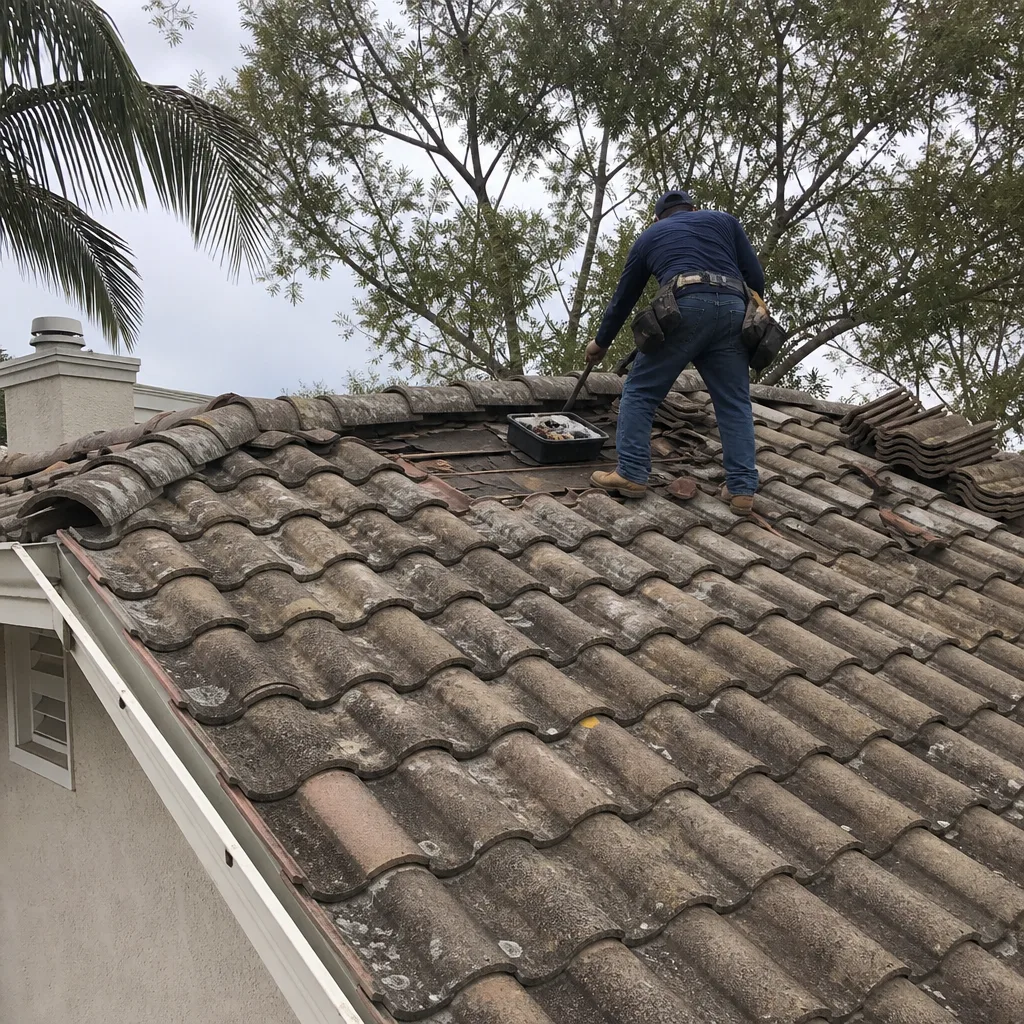 Before
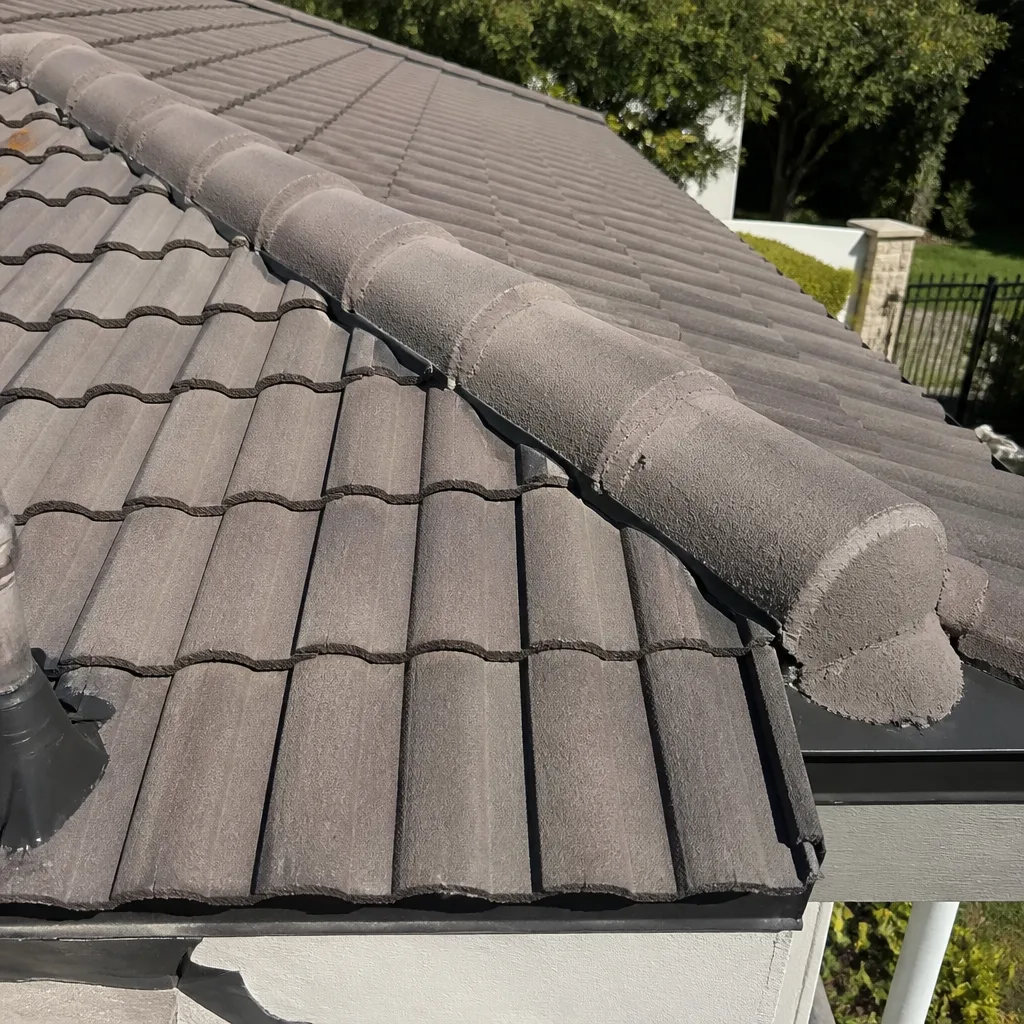 After
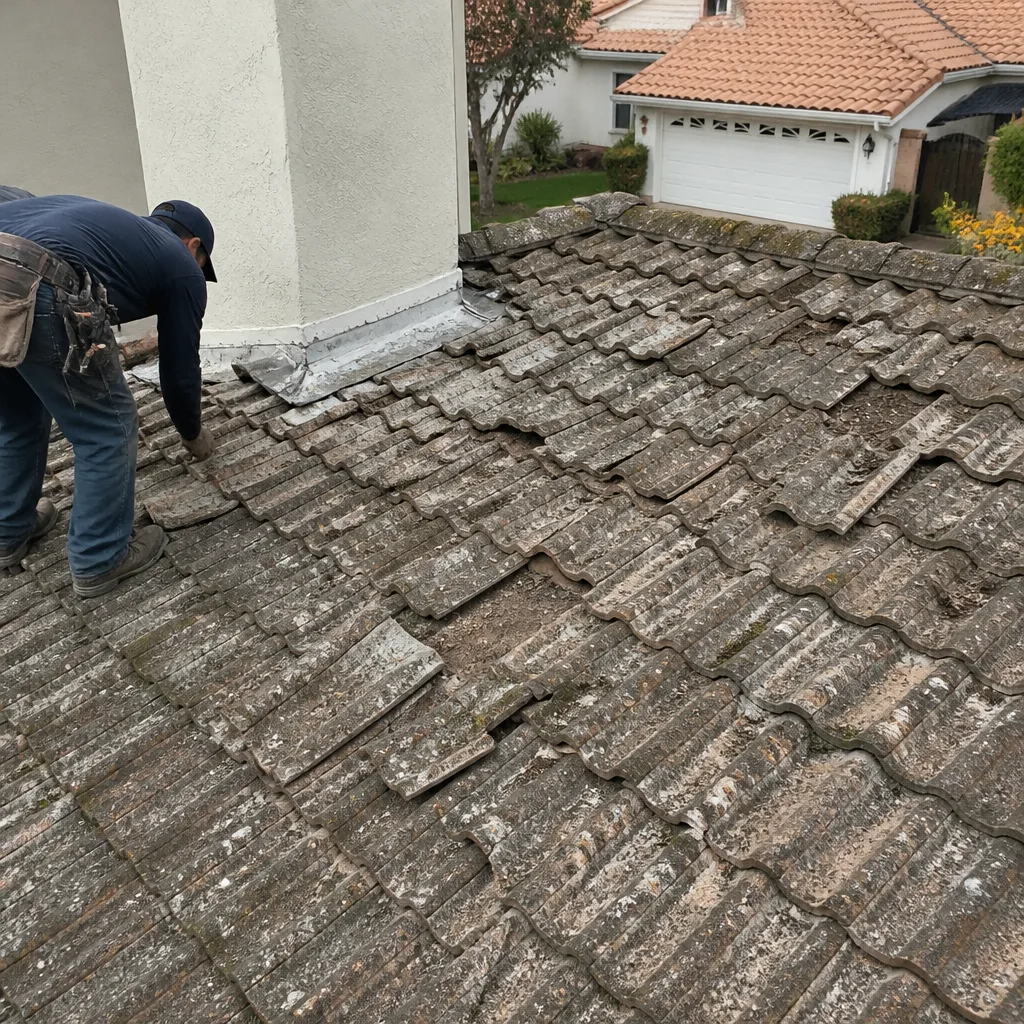 Before
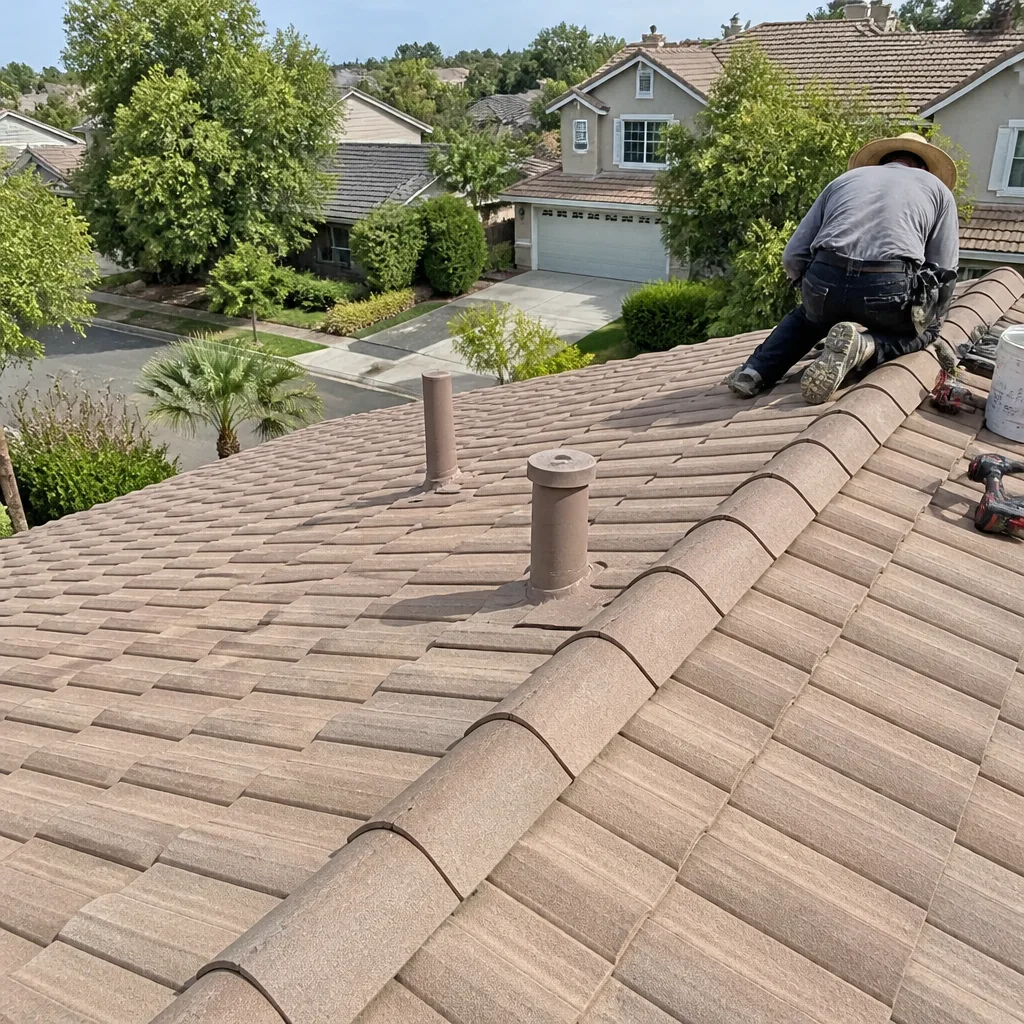 After