
Last updated October 31, 2026
 Metal roofing
 Architectural shingles
 Tile roofing
 GAF
 Owens Corning
 Flat & low-slope
Free roof inspection with deck photos before we talk money - GAF and Owens Corning certified installation
Seasonal Roofing Care for Aliso Viejo: Year-Round Homeowner’s Guide
Southern California’s “mild climate” reputation causes more deferred roof maintenance than any other single factor, because nothing seems urgent until the first real rain of the year hits a seam that dried out all summer. Aliso Viejo homeowners get lulled into thinking their roof is fine because the sun shines 300 days a year. Then the Santa Anas arrive in October, or a January atmospheric river parks over the Saddleback Valley, and suddenly that lifted shingle edge or brittle flashing caulk becomes a ceiling stain. This guide breaks down exactly what your roof faces in Aliso Viejo, when to act, and what you can safely handle versus what needs a trained eye. You’ll learn the two high-risk windows that define roofing in this area, the specific damage patterns we see most often, and a month-by-month plan that matches actual local weather, not generic national advice.
Quick Answer
Seasonal roof care in Aliso Viejo means managing two high-risk windows: Santa Ana wind season (October through December) and winter rain events (January through March), with prep work in late summer and early spring. The most effective annual routine is a pre-Santa Ana inspection focused on lifted shingle edges and ridge cap integrity, plus a post-rain attic check after every significant storm. Summer heat cycling degrades sealants and flashing caulk faster here than homeowners expect, so a late-summer sealant check is the single highest-ROI habit we recommend.
Styles & brands we work with
Table of Contents
- Pre-Santa Ana Season Prep: Wind Vulnerability Before October
- Post-Rain Inspection Protocol for Aliso Viejo’s Winter Pattern
- Summer UV and Heat Cycling: What Inland-Coastal Transitions Do to Roofs
- Spring Vegetation Management: Moss, Debris, and Root-Lift Risks
- Month-by-Month Roof Care Calendar for Aliso Viejo
- How Material Choice Affects Seasonal Performance in Aliso Viejo
- Common Mistakes to Avoid
- When to Call a Professional
Pre-Santa Ana Season Prep: Wind Vulnerability Before October
Santa Ana winds are the most destructive force Aliso Viejo roofs face each year. These offshore gusts pour through the canyons and across the ridgelines, routinely reaching 40 to 60 miles per hour during peak events. The damage isn’t theatrical, whole roofs don’t blow off houses. It’s incremental and specific, and it almost always starts at the edges.
High winds exploit any shingle edge that has lost sealant bond. Asphalt shingles have a heat-activated adhesive strip that bonds each course to the one below it. After years of UV exposure in Aliso Viejo’s intense sun, that adhesive fails and the shingle edge lifts just enough for wind to get underneath. Once wind gets under a shingle, it peels it back like a page in a book, exposing the nail line and the water barrier below. The same dynamic applies to ridge caps, those shingles that run along the peaks of your roof. Ridge caps live at the highest exposure point and age faster than field shingles, making them the most common wind casualty we see.
What to check before Santa Ana season:
- Walk the perimeter visually from the ground: use binoculars and look for shingle edges that sit even slightly proud of the surface, especially on west-facing slopes and along eaves.
- Check ridge caps specifically: look for cracked, curled, or missing cap pieces along every peak line.
- Clear all debris from valleys and gutters: wind-driven debris becomes abrasive, and valleys clogged with leaves channel water sideways into the roof assembly during the first rain.
- Inspect flashing at chimneys and walls: wind flexes metal flashing against brick and stucco, and that repeated motion breaks sealant bonds. Loose flashing is a direct entry point for wind-driven rain.
- Document everything with photos: date-stamped photos from August or September give you a baseline, so after a wind event you can see exactly what changed.
If you find lifted edges or cracked ridge caps before the winds arrive, a targeted repair now costs a fraction of what water damage will cost after the first Santa Ana rain. Captain Roof Repair handles Roof Repair in Aliso Viejo for exactly these pre-season vulnerabilities, and we’d rather do a small job in September than an emergency call in November.
Post-Rain Inspection Protocol for Aliso Viejo’s Winter Pattern
Aliso Viejo’s rain doesn’t fall evenly across the season. It comes in clusters, often two to four inches in a single atmospheric river event, followed by dry stretches. This pattern means that a small leak never stays small for long. The first storm of the season is the most revealing, because every dried-out seam, every perished caulk joint, and every micro-fracture in a tile or shingle gets tested at full saturation for the first time in months.
The morning after a heavy rain, do this:
- Go into the attic with a flashlight before sunrise or on an overcast day. In dark conditions, you can spot water staining and glistening moisture on the underside of the decking that’s invisible in direct light.
- Look for a “water line” pattern on the decking. Stains that run along a rafter or a seam indicate slow capillary wicking from a specific entry point, often a nail hole or flashing gap.
- Check for daylight around pipe penetrations and vents. If you can see light, water can enter. Pipe boots dry out and crack in Aliso Viejo’s UV, and they typically fail within 8 to 10 years.
- Inspect the garage ceiling and the interior side of exterior walls on the upper floor. Water travels sideways along the decking and drips far from the actual penetration point, so wall stains often get misattributed to plumbing when the real source is a roof leak.
- Walk the exterior with binoculars looking for displaced shingles or lifted flashing. Wind-driven rain gets underneath anything that isn’t sitting flat.
If you find staining but no obvious source from the exterior, don’t wait for the next storm to confirm. A professional roof inspection uses moisture meters and decking-level assessment to locate entries that aren’t visible from the ground or from inside a dry attic. Captain Roof Repair treats Roof Inspection in Aliso Viejo as a diagnostic service, not a sales tool, because we’d rather give you an honest answer than an unnecessary estimate.
Summer UV and Heat Cycling: What Inland-Coastal Transitions Do to Roofs
Aliso Viejo sits in an inland-coastal transitional zone, which means summer temperatures routinely climb into the high 80s and low 90s, with rooftop surface temperatures 30 to 40 degrees hotter. Asphalt shingle surfaces on a 90-degree day can hit 140 degrees, and when the marine layer rolls in at night, temperatures drop 50 degrees in a few hours. That daily expansion and contraction is called heat cycling, and it’s the slow killer of roofing materials.
Heat cycling attacks materials in three specific ways in Aliso Viejo:
- Sealant degradation at flashings: every roof has metal flashing where the roof meets a wall, chimney, or dormer. The sealant caulk between flashing and structure expands and contracts constantly, and after three to five summers it dries, cracks, and loses adhesion. This is the number-one source of slow, seasonal leaks in Aliso Viejo homes.
- Granule loss on asphalt shingles: the ceramic granules embedded in shingle surfaces protect the asphalt from UV degradation. Heat accelerates granule loosening, and when those granules end up in your gutters, the shingle underneath oxidizes rapidly. A shingle that has lost its granule layer is brittle and hydrates poorly, meaning it cracks instead of flexing.
- Flashing metal fatigue: flashing expands and contracts more than the materials around it, and over years this creates what we call “metal memory” or work hardening at corners and bends. A crack in a flashing corner can leak for an entire rainy season before it’s visible from inside.
The practical takeaway is that late summer is the right time to check sealant and flashing conditions on your Aliso Viejo roof. By late August or early September, the summer heat has done its worst work, and you can identify failures before the rains come. In our experience, homeowners who do an annual sealant check spend dramatically less over a 10-year window than homeowners who wait until there’s a visible leak.
Spring Vegetation Management: Moss, Debris, and Root-Lift Risks
Aliso Viejo’s landscaping culture is one of its defining features. Mature eucalyptus along Aliso Creek, established oak canopies in neighborhoods like Glenwood and Westridge, and lush residential plantings everywhere mean that roofs here collect more organic debris than homeowners expect from a “dry” climate. Spring is when vegetation management becomes a roofing issue.
Moss and algae growth: moss doesn’t need constant rain to establish on a roof. It needs shade, moisture retention from leaf litter, and cool morning temperatures, all of which are present on north-facing slopes and under tree canopies in Aliso Viejo. Moss roots into shingle granules and between tile laps, creating dams that hold water against the roof surface. Over time, this trapped moisture works through the material and creates decking rot. The solution is regular removal plus keeping overhanging branches trimmed back to allow morning sun to hit the roof surface.
Debris dams in valleys: roof valleys concentrate drainage, and organic debris accumulates there faster than anywhere else. A debris dam in a valley turns flowing water into ponding water, and ponding water finds every seam, every nail hole, and every hairline crack. This is one of the most common causes of localized ceiling stains in Aliso Viejo homes with complex roof geometry.
Root-lift risk: this one surprises people. Large trees planted close to a foundation send roots under the structure, and in clay-heavy soils that shrink and swell with moisture cycles, those roots contribute to differential settlement. The result is slight roof plane distortion that compromises flashing and tile alignment. It’s subtle, and it’s cumulative, and it usually shows up first as recurring leaks at the same location no matter how many times that area is repaired. The fix starts with tree placement and root barriers, which makes this a landscaping decision as much as a roofing one.
For material selection, we’ve seen that tile and heavier shingle products resist vegetation-related problems better than lightweight materials. We talk through these factors during a Roof Replacement in Aliso Viejo project, because the right product choice in year one prevents a decade of vegetation headaches.
Month-by-Month Roof Care Calendar for Aliso Viejo
Generic national roofing advice says “inspect in spring and fall,” but that calendar assumes four seasons. Aliso Viejo runs on a two-season rhythm with compressed risk windows, and the action items land on a different schedule. Here’s the month-by-month map that matches what the local climate actually does.
January: Post-Storm Assessment
After each significant rain event, do the attic check covered in the post-rain protocol above. Keep a log with photos, because a stain that appears slowly over multiple storms tells a different story than one that appears suddenly. If you see any evidence of water, schedule a professional inspection rather than waiting to see if it happens again. Small leaks never self-heal.
February: Flashing and Sealant Check
By February, the winter’s heaviest rains have tested every seam on your roof. This is the month to walk the perimeter with binoculars and look at every flashing interface: chimneys, skylights, walls, valleys, and pipe boots. Cracks in sealant at this point indicate a near-term failure, and fixing them before the final rains saves you from a spring leak.
March: Gutter and Valley Clearing
Spring growth hasn’t started yet, but winter debris has finished falling. Clear all gutters, downspouts, and especially valleys. Check that downspouts direct water at least three feet from the foundation. Clogged drainage in March means standing water during the next rain event, whenever it comes.
April: Vegetation Assessment
As new growth starts, look at every branch overhanging your roof. Cut back anything within about six feet of the roof surface, and consider removing branches that drop heavy leaf litter onto valleys or skylights. April is also when moss starts showing on shaded slopes, so treat it early before it establishes root structures.
May: Post-Winter Repair Window
The rains are done and the heat hasn’t peaked yet. This is the ideal month for any repairs identified during the winter. Sealant is more workable in mild temperatures, and contractors in Aliso Viejo have more scheduling flexibility now than during the fall pre-rain rush.
June: UV Exposure Check
Head into the attic on a sunny afternoon and look at the underside of the decking for any areas that seem hotter than they should be. Also check for any granule accumulation patterns in gutters that indicate accelerated wear on specific slopes. This is a good month for a professional inspection if you haven’t had one in two or more years, because the early-summer lull means you get thorough attention.
July: Heat Damage Monitoring
Peak heat cycling stress happens now. Look for shingle edges starting to curl, which is the earliest visible sign of sealant and mat degradation. Also check for “fish mouthing,” where shingle tabs pop upward at the center. Both are heat-related and both are early indicators that a roof is moving into replacement territory.
August: Pre-Santa Ana Sealant Work
This is the most important month on the calendar. Do a complete visual inspection of all sealant, caulk, and flashing interfaces. The summer UV has done its damage, and you still have a window before the winds arrive. Small sealant repairs now prevent the wind-driven water events that cause the most expensive storm damage.
September: Final Wind Prep
Complete any remaining repairs, clear debris one more time, and make sure nothing on your roof is loose. Check ridge caps specifically, as they take the brunt of Santa Ana gusts. If your roof has any existing loose pieces, October winds will find them.
October: First Santa Ana Window
Winds arrive. After the first significant event, do a ground-level walkaround looking for displaced shingles, lifted flashing, or anything that looks different from your September baseline. If you see damage, address it before the next wind event or rain. Wind damage compounds quickly.
November: Mid-Season Check
Between Santa Ana events, check ridge caps and west-facing edges. This is also the month when the first real rain usually arrives, so do an exterior visual check after the first storm even if it’s lighter than mid-winter events.
December: Full Santa Ana and First Rain Review
Completely assess the roof. Combined Santa Ana wind stress plus the first rain means any existing vulnerability has now been exposed. Make repairs before the heavier January through March rains arrive. The December repair window is narrow, but it exists and it matters.
How Material Choice Affects Seasonal Performance in Aliso Viejo
Material selection plays a bigger role in seasonal roof care than most homeowners realize. A roof that handles Aliso Viejo’s specific seasonal stresses well is one that balances UV resistance, wind resistance, and thermal stability. The right product depends on your home’s exposure, your slope, and your priorities, and we work across multiple manufacturers to find that match rather than pushing one brand by default.
Class 4 impact-rated shingles, for example, resist the wind-driven debris common during Santa Ana events better than standard-issue products. Some homeowners in exposed ridgeline communities find that self-sealing shingle systems hold up better to repeated heat cycling, because the adhesive strips re-activate during each heating cycle instead of failing permanently. Atlas and IKO both offer products with strong wind and UV resistance profiles, and certain Tamko lines are worth considering for homes with steep slopes and high sun exposure. Boral tile products, while a heavier investment, are effectively immune to UV degradation and provide natural thermal buffering that reduces heat cycling stresses on the underlayment.
The point isn’t that one brand or material wins universally. The point is that Aliso Viejo’s seasonal stress pattern favors some materials over others depending on your specific home. A material-agnostic contractor who works across GAF, CertainTeed, Owens Corning, IKO, Atlas, Tamko, and Boral can make that recommendation based on what your roof actually faces, not what’s most convenient to order. The right material for your roof, not for our supplier.
Common Mistakes to Avoid
- Skipping the late-summer inspection because “the roof looks fine.” Most Aliso Viejo roof failures we see are visually subtle in August and catastrophic by February. The sealant crack that’s invisible from the ground becomes a ceiling stain after two inches of rain.
- Treating all seasons equally. A homeowner who does “spring and fall” maintenance on a generic schedule misses the Santa Ana wind window entirely. In Aliso Viejo, the September prep window matters more than any other single moment on the calendar.
- Ignoring attic evidence between rain events. Water stains don’t disappear when the rain stops. If you saw water in January and didn’t address it, it’s still there in June, just drying into your decking and creating the conditions for wood rot and mold.
- Clearing debris but not checking what’s under it. Debris dams cause visible problems, but what they hide is worse. A valley that’s been dammed for a season often has granule loss, sealant failure, or cracking underneath that no one sees until the debris is gone.
- Replacing a few shingles season after season without asking why. If the same area fails repeatedly, the problem isn’t the shingle. It’s flashing, roof plane distortion, or a structural drainage issue. Repeated repairs at the same location are a signal to get a full diagnostic inspection, not another patch.
- Waiting until fall to schedule work. Every roofer in Orange County is busy in September and October. If you identified issues in winter or spring, the summer months are the time to get them addressed without rushing or compromising on the crew’s attention.
- Not keeping maintenance records. When you eventually sell your Aliso Viejo home, a roof maintenance log with dated photos proves that the roof was cared for, which matters in a market where buyers are increasingly educated about deferred maintenance costs.
When to Call a Professional
Some seasonal roof work is safe and simple to do yourself: clearing gutters, doing visual walkarounds with binoculars, keeping a photo log, trimming back overhanging branches. Other work isn’t. If you see active water staining in the attic, if shingle edges are lifting across broad areas rather than in an isolated spot, if ridge caps are cracked or missing, or if flashing has visibly separated from a wall or chimney, that’s the point to call someone who does this full-time. Walking a roof surface carries real fall risk, and diagnosing a leak’s true entry point on a complex roof takes experience and the right tools. We’d rather give you a straight answer from a professional inspection than have you guess. Captain Roof Repair offers free estimates in Aliso Viejo, call (844) 717-4930 to schedule one.
See the difference
 Before
 After
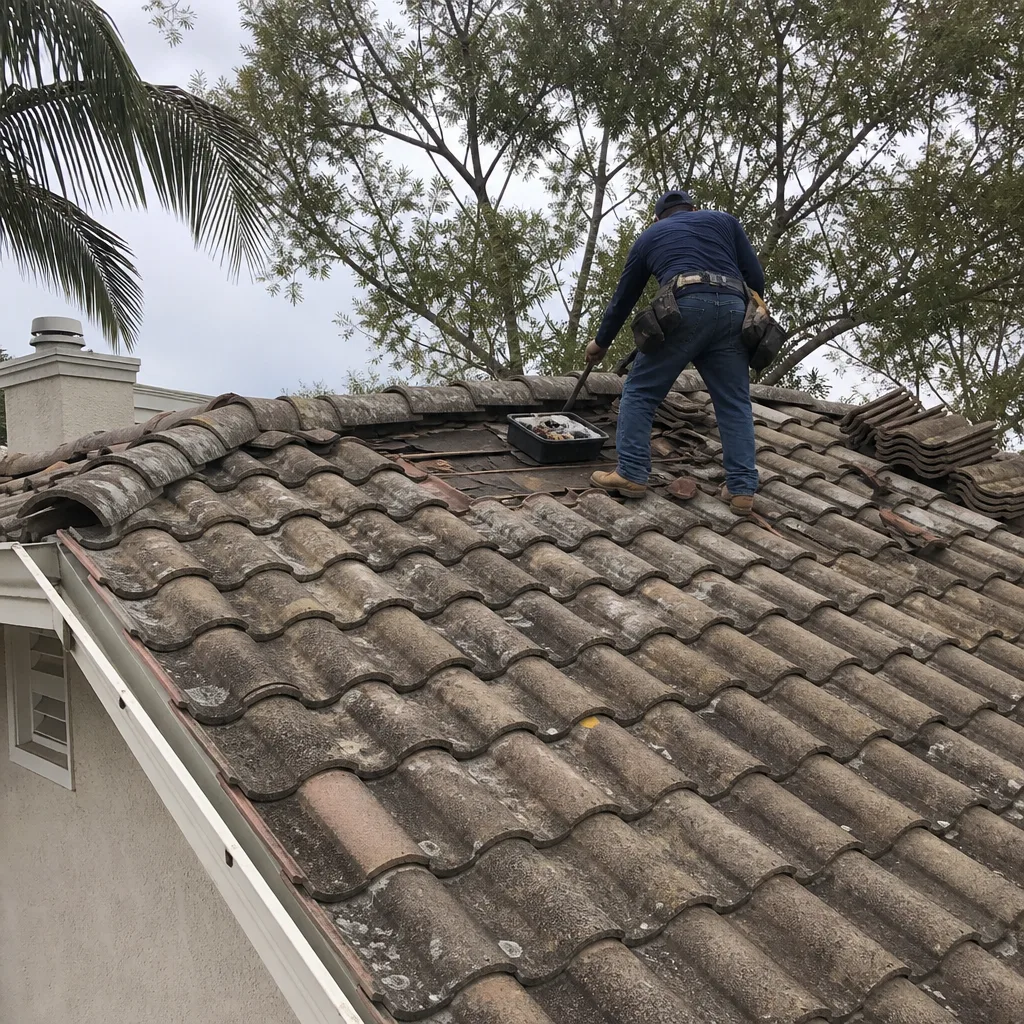 Before
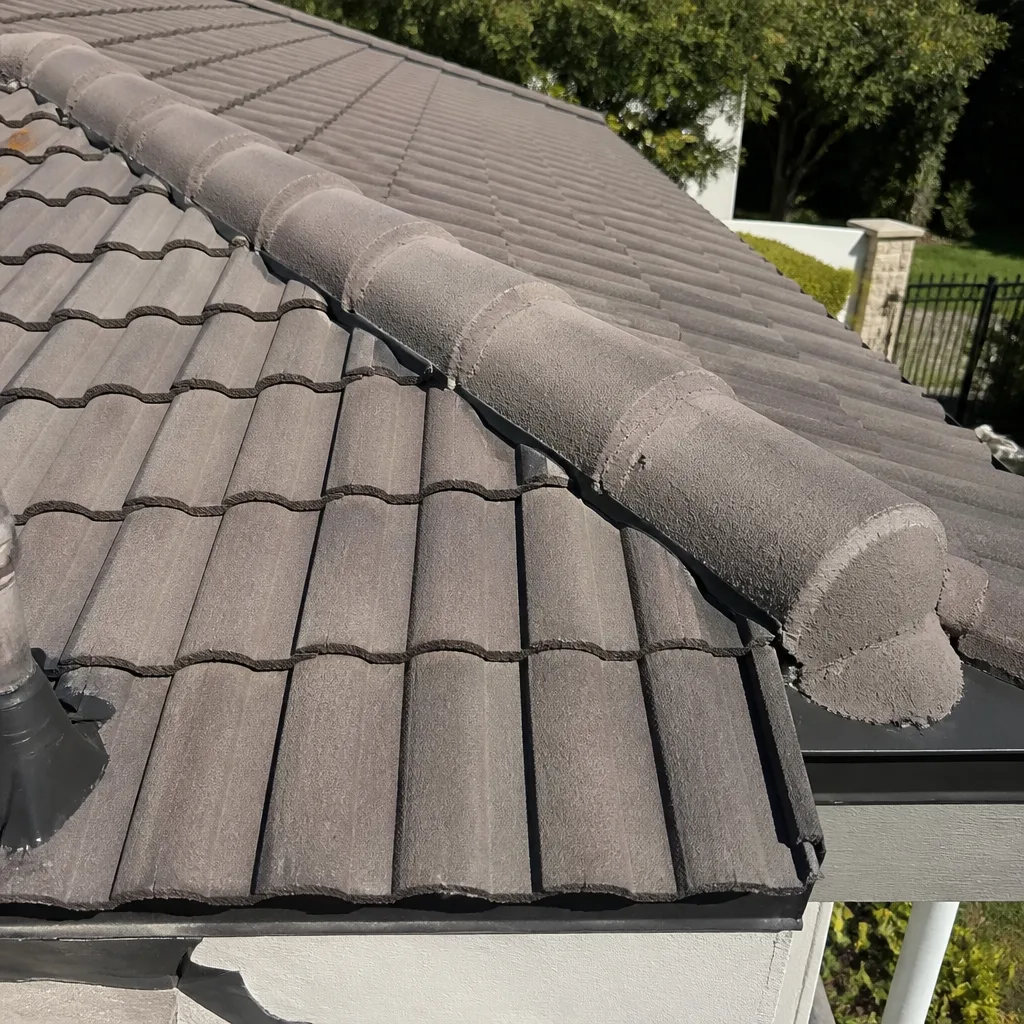 After
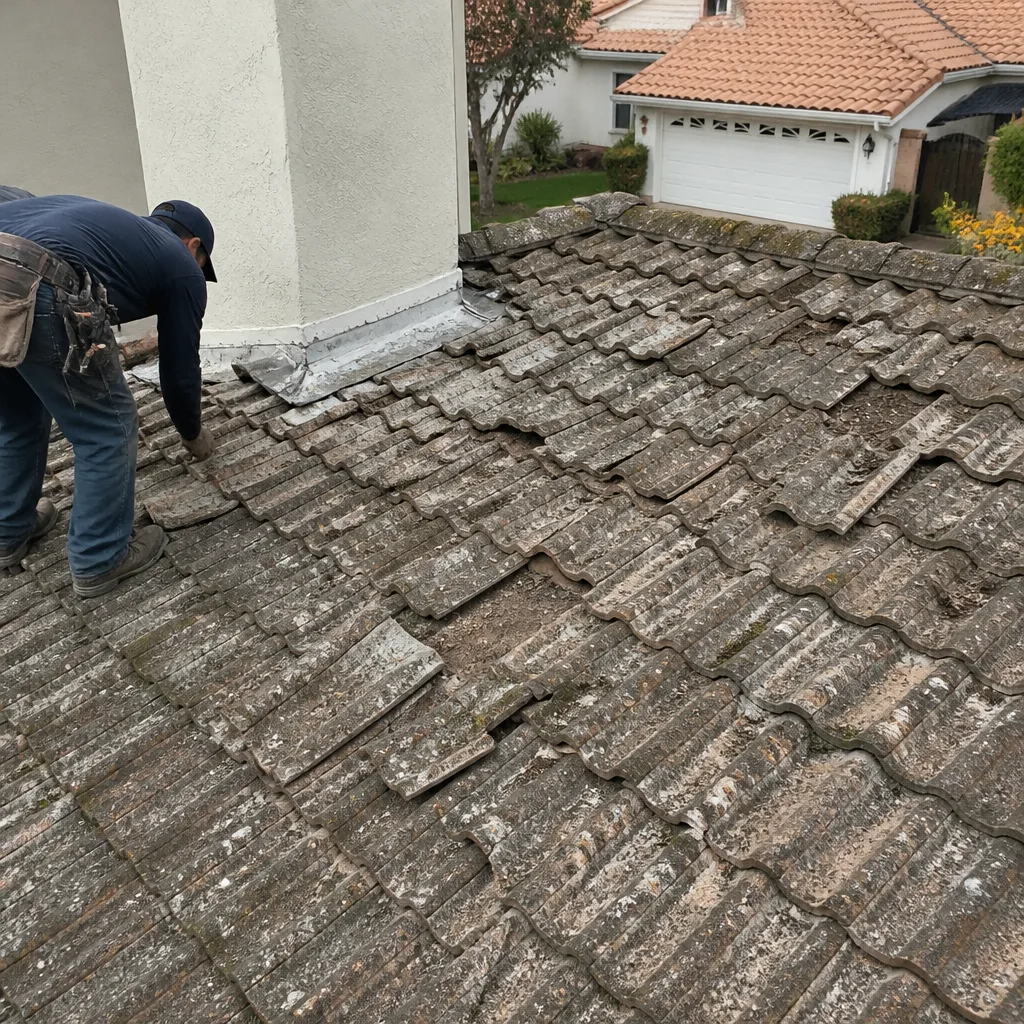 Before
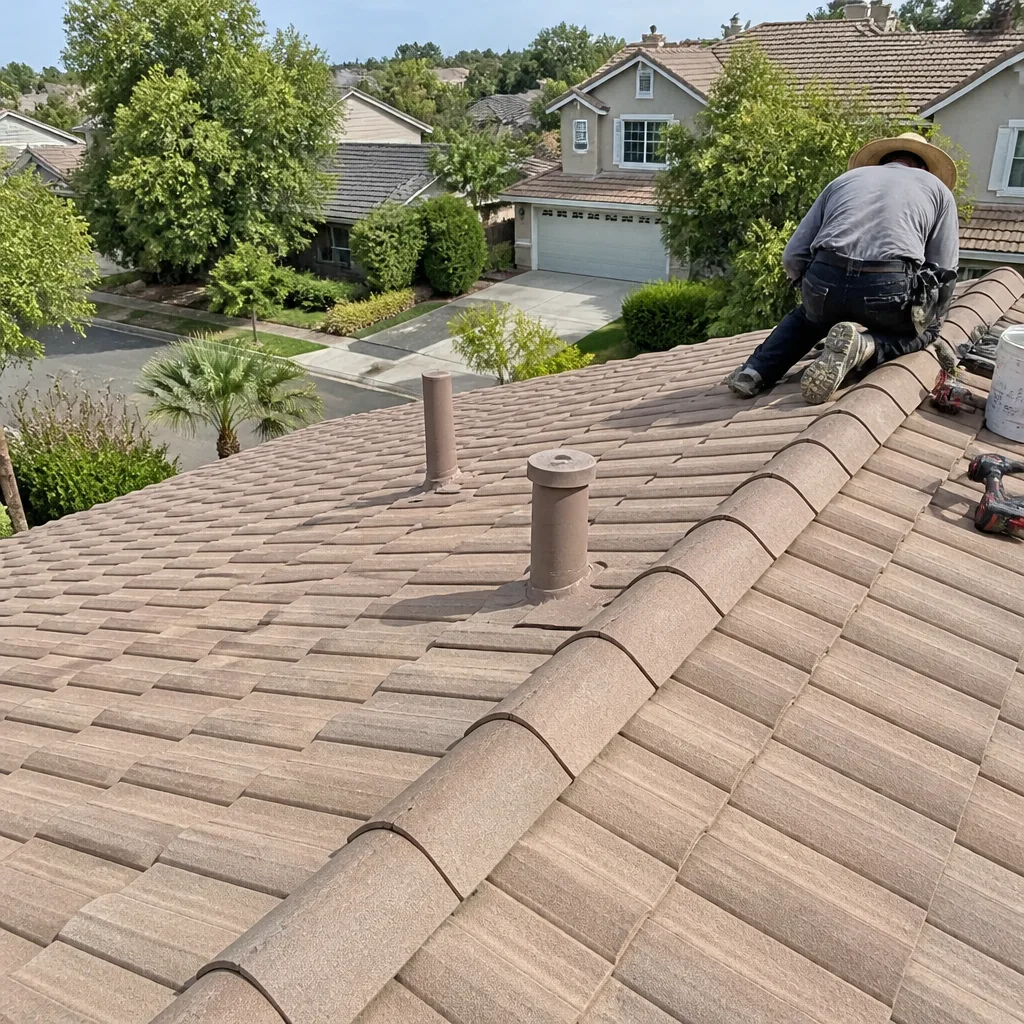 After
Frequently Asked Questions
Once every two years is the minimum for most Aliso Viejo homes, with an additional check after any major Santa Ana wind event or heavy winter storm that produces visible damage elsewhere in your neighborhood, as covered in The Complete Guide to Roofing in Aliso Viejo. Homes with heavy tree canopy, complex roof geometry, or tile roofs over 15 years old benefit from an annual inspection.
A basic visual inspection with sealant touch-up typically runs from $150 to $400 depending on roof size and accessibility, while more extensive repairs like flashing replacement or valley work range from $500 to $2,500. The cost of deferred maintenance is significantly higher: a roof leak left through one full Aliso Viejo winter can cause decking rot and insulation damage that triples the final repair bill, which is why our Complete Roof Repair Guide for Aliso Viejo Homeowners stresses acting fast. Call (844) 717-4930 for an exact quote, estimates are free.
Yes, Santa Ana winds are the leading cause of wind-related roof damage in Aliso Viejo, primarily by exploiting shingle edges that have lost sealant bond and by lifting ridge caps that were already cracked or loosened from years of UV exposure. The damage is typically accumulative and localized rather than catastrophic, which is why pre-season inspection matters more than post-storm emergency response.
Late spring through early summer (May through July) is the ideal window for roof replacement in Aliso Viejo, because temperatures are warm enough for proper sealant activation but mild enough for comfortable working conditions, and the work is complete before Santa Ana season and the winter rains—timing we break down further in Choosing the Right Roofing Brand: A Buyer’s Guide for Aliso Viejo. Fall replacements are possible but often compressed by contractor demand.
Recurring leaks at the same location almost always indicate a flashing failure, a sealant crack at a wall or chimney interface, or a structural drainage problem, not a failing shingle or tile at the visible leak point. The actual entry point is often several feet away from where water appears inside, which is why professional moisture tracking matters more than repeated localized patches.
A newly replaced roof has significantly lower maintenance needs for the first several years, but the seasonal inspection rhythm stays important because flashing sealants, pipe boots, and valley details all age on their own schedules regardless of the shingle or tile warranty. New roofs benefit from the same pre-Santa Ana and post-rain checks, just with fewer expected findings.
The Bottom Line
Aliso Viejo’s roofing calendar is defined by two high-risk windows: Santa Ana wind season from October through December and the January through March rain pattern that tests every seam on your roof. The homeowners who spend the least on emergency repairs are the ones who treat late summer as the critical prep window, walk their attics after every significant storm, and address small failures before they become structural ones. You don’t need to understand every nuance of roofing science to protect your home, but you do need to know what your roof faces in this specific climate and to act on the early signs. The team at Captain Roof Repair home works across seven major roofing brands and handles every stage of roof health from the first inspection to the final shingle. If you’re not sure what your roof needs right now, that’s exactly what an inspection is for, and we’re honest enough to tell you when the answer is “nothing yet.”
Written by the team at Captain Roof Repair, serving Aliso Viejo since 2017. Explore more guides & resources.