
Last updated October 31, 2026
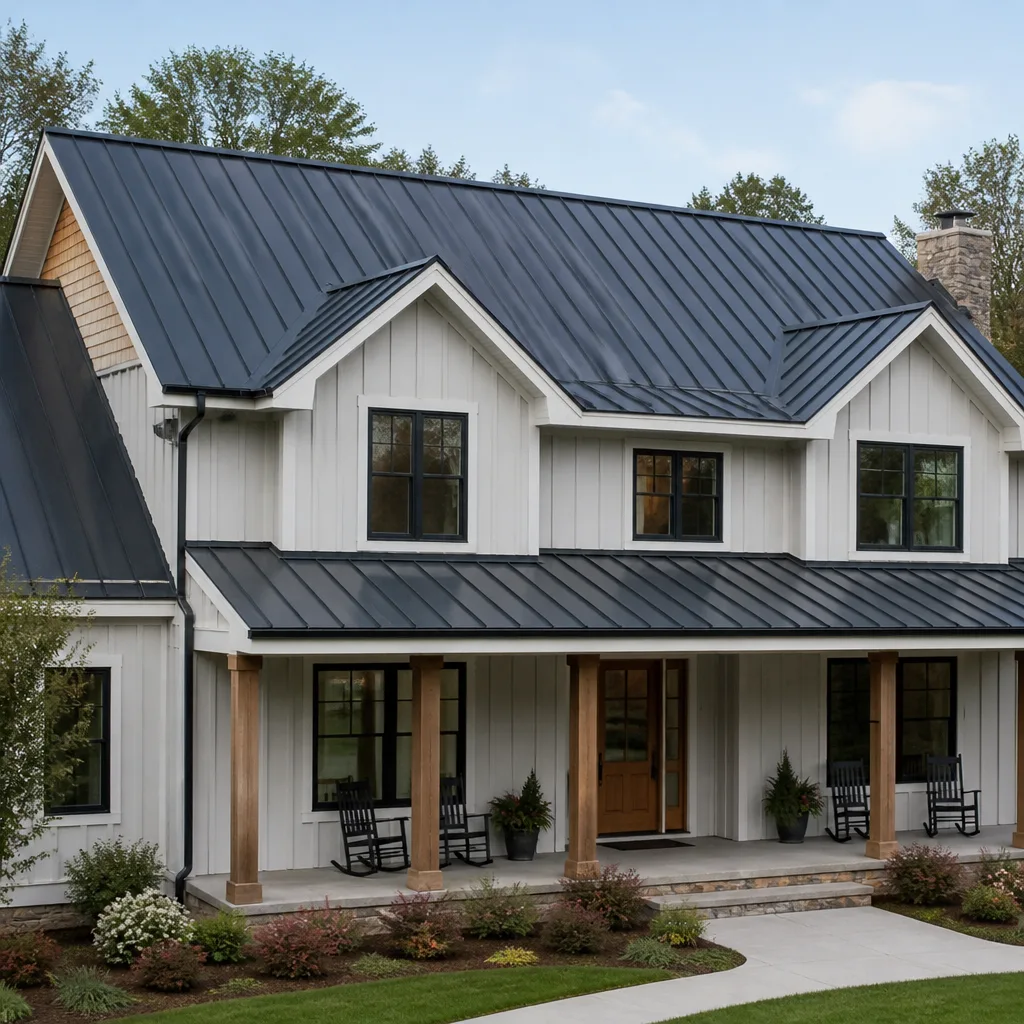 Metal roofing
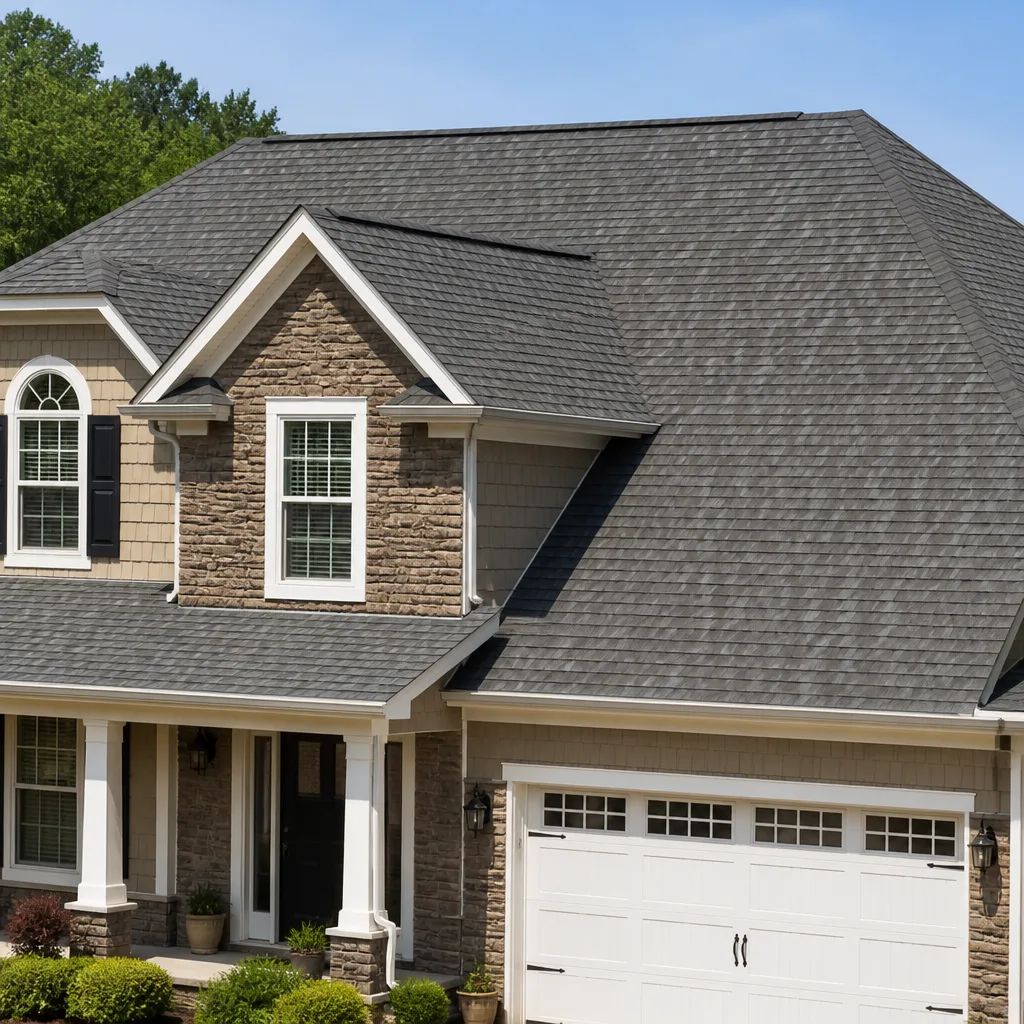 Architectural shingles
 Tile roofing
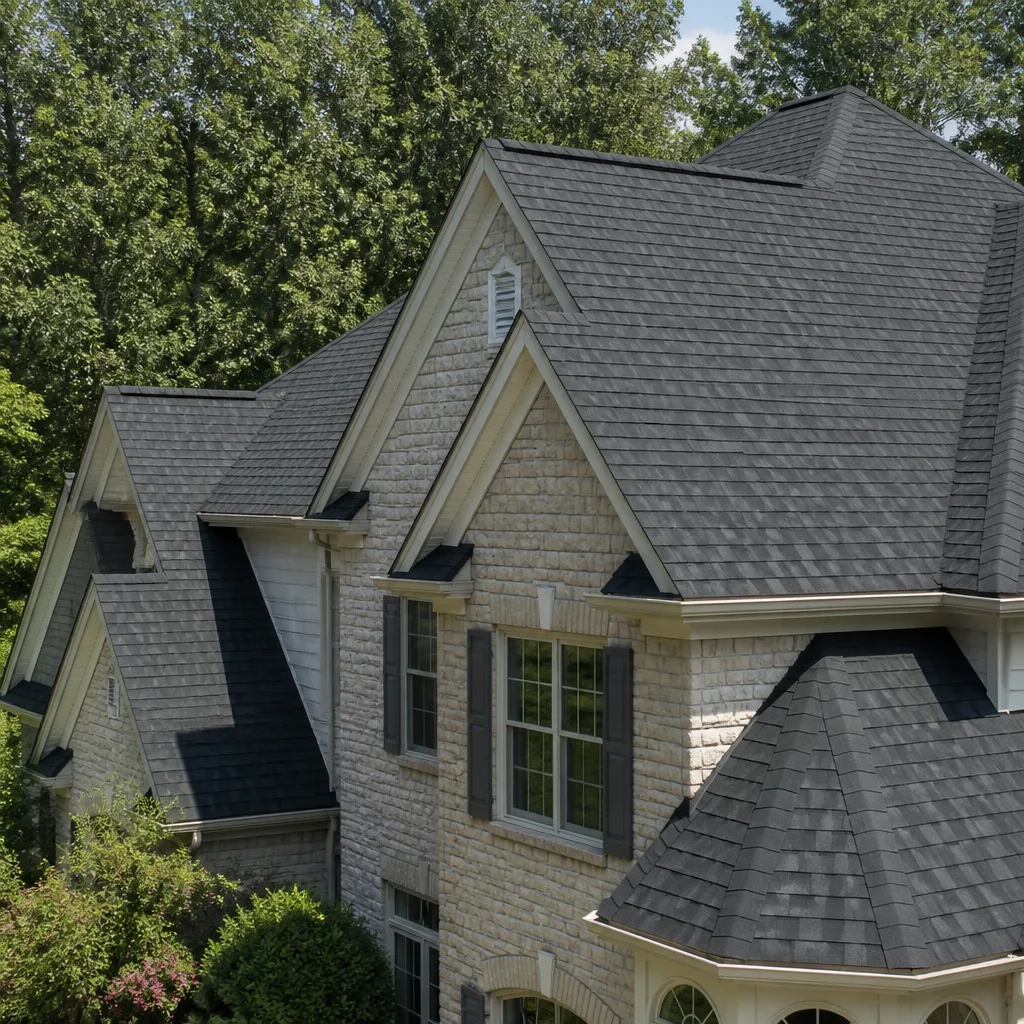 GAF
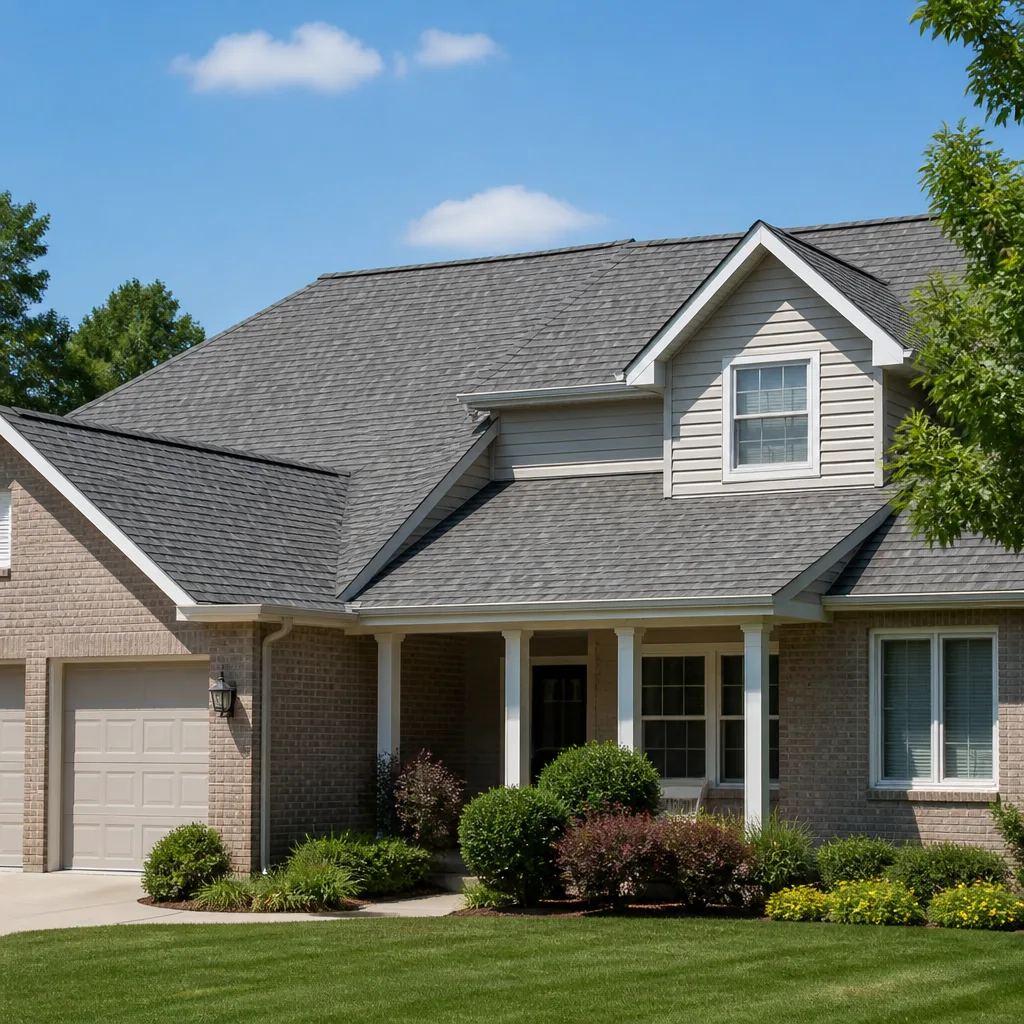 Owens Corning
 Flat & low-slope
Free roof inspection with deck photos before we talk money - GAF and Owens Corning certified installation
Roofing Emergency Preparedness Guide for Aliso Viejo Homes
When a Santa Ana gust tears a section of ridge cap off a roof at 11 p.m., the homeowner’s next 12 hours look completely different depending on whether they have a contractor contact, a tarp, and a photo record of their roof – or none of those. In Aliso Viejo, where wind events arrive with little warning and winter storms can dump a season’s worth of rain in two days, the difference between a small repair and a five-figure interior rebuild often comes down to decisions made weeks or months before the emergency. This guide lays out the three pre-emergency decisions that matter most, the exact steps to take in the first hour after roof damage, and how to avoid the costly mistakes we see homeowners make every storm season.
Quick Answer
A roofing emergency in Aliso Viejo is handled in three phases: protect the interior (tarps, buckets, moving belongings), document every angle with photos and video before touching anything, and call a licensed contractor who can assess structural damage before you speak to an insurance adjuster. The homeowners who get through roof emergencies with the least damage and lowest cost are the ones who already have a contractor relationship, a documented roof condition record, and temporary weatherproofing supplies on hand. For a deeper look at what to watch for before trouble starts, see our Roofing Warning Signs: A Aliso Viejo Homeowner’s Reference Guide.
Styles & brands we work with
Table of Contents
- The Three Pre-Emergency Decisions That Determine Outcome
- The First Hour: A Step-by-Step Damage Response Sequence
- How to Tarp Safely in Aliso Viejo Without Causing More Damage
- Insurance Claim Sequencing: What to Document, When, and What Not to Say
- Wildfire Ember Intrusion: The Aliso Viejo Roof Emergency Nobody Plans For
- Evaluating Emergency Contractor Offers at the Door
- How Aliso Viejo Roof Profiles Affect Emergency Response
- The Emergency Supplies Kit Every Aliso Viejo Homeowner Should Have
The Three Pre-Emergency Decisions That Determine Outcome
Most roofing emergencies are not survived by skill. They are survived by preparation. After years of responding to storm damage across Aliso Viejo, we have identified three decisions that consistently separate homeowners who recover quickly and cheaply from those who endure weeks of displacement and inflated repair bills.
The first decision is establishing a contractor relationship before anything goes wrong. This does not mean signing a maintenance contract. It means having a specific roofing company you have already vetted, already spoken to, and already know will answer the phone after a wind event. In our experience, homeowners who have had a Roof Inspection in Aliso Viejo with one company – even a year prior – move through the emergency process twice as fast. They know who to call. They are not standing in a wet living room at midnight scrolling through search results while competing for the same crews as every other damaged home in the neighborhood.
The second decision is maintaining a documented roof condition record. We cannot stress this enough: after every roofing service we perform in Aliso Viejo, we recommend homeowners keep a photo folder showing the roof’s condition at that moment. Shingle rows, flashing points, ridge lines, valley junctions. When an insurance claim involves questions about pre-existing damage versus storm damage, the homeowner with date-stamped photos of a sound roof wins the dispute almost every time. The homeowner without them loses.
The third decision is simpler and cheaper than most people expect: keeping temporary weatherproofing supplies on hand. A single heavy-duty tarp, a box of roofing nails, furring strips, and a roll of waterproof tape costs under $100 and takes up a shelf in the garage. In a wind event that tears off shingles or a ridge section, those supplies stop water intrusion in minutes rather than hours – and the cost difference in interior damage is routinely measured in thousands of dollars.
The First Hour: A Step-by-Step Damage Response Sequence
The first hour after a roof emergency in Aliso Viejo determines the trajectory of the entire recovery. Here is the exact sequence we train our customers to follow, in order, without exception. For year-round maintenance that can prevent these moments, review our Seasonal Roofing Care for Aliso Viejo: Year-Round Homeowner’s Guide.
- Secure the interior first. Move furniture, electronics, rugs, and heirlooms away from the leak zone. Place buckets or plastic bins under active drips. If water is running down a wall or through a light fixture, shut off power at the breaker for that circuit. Water and electricity do not negotiate.
- Contain standing water. Towels, mops, wet-dry vacuum. The goal is keeping water from reaching drywall, subfloor, or structural framing. Drywall wicks moisture aggressively – once saturated, it becomes a mold risk within 48 hours.
- Document everything before touching the roof. Photos and video from the ground, from the attic, from inside the house. Wide shots showing context, close shots showing damage. Date-stamp everything. This documentation is the backbone of an insurance claim and the primary defense against underpayment.
- Apply temporary tarping if safe to do so. We cover the specifics below, but the principle is: a tarp applied within the first hour prevents more damage than any repair applied the next day. If the roof is steep, wet, or you are working alone, skip this step and call a professional – no roof is worth a fall.
- Call your contractor before your insurance company. This is the sequencing most homeowners get wrong. A contractor assessment gives you facts: actual damage, actual repair scope, actual cost range. Those facts give you negotiating leverage before the adjuster shows up. Call the insurance company after the contractor has told you what you’re dealing with, not before.
How to Tarp Safely in Aliso Viejo Without Causing More Damage
Emergency tarping is a stopgap, not a repair. Done correctly, it stops water intrusion and buys days or weeks for a proper fix. Done incorrectly, it tears further at the damaged area, allows water to pond, or – worst case – injures the person doing it. For Aliso Viejo’s roof profiles, which skew heavily toward Spanish tile and dimensional asphalt shingle on moderate slopes, the following approach is what we recommend to homeowners who must tarp themselves before a crew arrives.
Anchor Points That Work on Aliso Viejo Roofs
The most common tarping failure we see in Aliso Viejo is not the tarp itself – it is the anchoring. A tarp secured only along its outer edges will blow loose in the first sustained wind that follows. The tarp must be anchored along the peak, along the outer perimeter, and along interior sections where the roof meets valleys or hips.
For asphalt shingle roofs, use wood furring strips – never nails driven directly through the tarp. Roll the tarp edge around a furring strip, then screw the strip down through the shingle and into the roof deck. This distributes the hold across a wider area and prevents the grommets from tearing out. Place anchors every two feet, not just at corners.
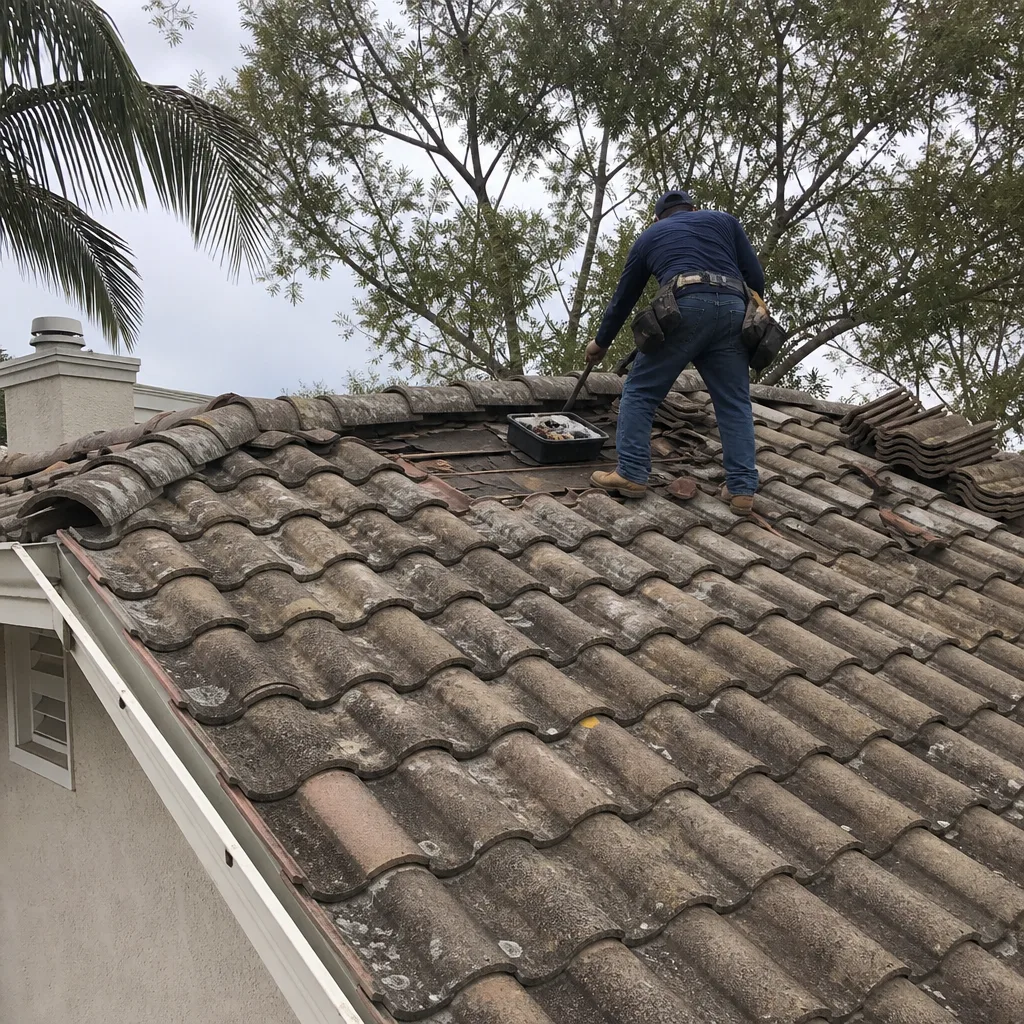
For Spanish tile profiles common throughout Aliso Viejo neighborhoods, anchoring is more complicated. Tile cannot be safely nailed through. Instead, run furring strips horizontally under the lip of intact tile courses and secure with tile-safe fasteners that hook under the leading edge. If that sounds involved, it is – and it is the reason we tell homeowners with tile roofs that professional tarping is worth the call. A broken tile underfoot creates a new problem.
The Slope Consideration
Steep-slope roofs are the most dangerous place to work under normal conditions. In an emergency – wet, dark, wind still active – the risk multiplies. We recommend homeowners stay off roofs steeper than a 6:12 pitch, period. The rule is simple: if you cannot stand comfortably on the roof without bracing yourself, you should not be up there in emergency conditions.
High-tension exposure and height work are genuinely dangerous. A fall from a single-story Aliso Viejo roofline can produce catastrophic injury on uneven ground or railing. We would rather you call us and wait an hour than attempt a tarp placement you cannot complete safely. The roof can be tarped later. A spine cannot.
Insurance Claim Sequencing: What to Document, When, and What Not to Say
Insurance claims after a roofing emergency in Aliso Viejo follow a predictable pattern. The homeowner who understands that pattern collects full payment. The homeowner who does not gets partial payment and a long appeal process. Here is the sequencing we have refined through years of watching what works. For regulatory context that affects these claims, see Roofing Permits, Codes & Inspections in CA: What You Need to Know.
Documentation Order
- Immediate damage – exterior. Photograph every damaged area from at least three angles. Wide establishing shots showing the whole roof, tight shots showing individual shingle or tile damage, and shots from ground level that show the roof in context of the home.
- Interior water intrusion. Document every wet spot, every stain, every drip. Show the water path: where it entered, where it ran, where it pooled. Include photos of the ceiling, walls, flooring, and any damaged contents.
- The sky condition. This sounds odd, but it matters. Photograph the sky after the event – dark clouds, standing water, windblown debris. Weather conditions substantiate the timeframe of the claim.
- The tarped roof. After temporary protection is applied, photograph it. Insurance companies want to see that the homeowner took reasonable steps to prevent further damage. A tarped roof is evidence of good faith.
What Not to Say to an Adjuster
The adjuster is not your adversary, but they are not your advocate either. They are a neutral evaluator whose employer pays less when they find pre-existing damage. The phrases we coach our Aliso Viejo customers to avoid: “I’ve been meaning to get that looked at,” “That area was already a little worn,” and “I don’t know when that started.” Any of those statements – even made casually – becomes a basis for denial or reduction.
What to say instead: “The roof was in sound condition before this event. We have photos.” Then produce the dated photo record. That record – the second pre-emergency decision from earlier – is the single most valuable piece of evidence in a disputed claim.
Wildfire Ember Intrusion: The Aliso Viejo Roof Emergency Nobody Plans For
Ask an Aliso Viejo homeowner about roof emergencies and they will tell you about wind and rain. Almost nobody mentions embers. Yet wildfire ember intrusion is the roof threat that causes the most catastrophic and least insured losses in this part of Orange County. Homes on the eastern edge of Aliso Viejo back against open grassland and chaparral – exactly the terrain that produces wind-carried embers capable of traveling a mile or more.
Here is what most homeowners do not realize: embers do not need to ignite the roof surface to destroy the home. They enter through ridge vents, valley gaps, and under tile edges, then smolder in the attic for hours before producing flame. The homeowner goes to bed thinking the danger passed with the wind shift, and wakes to smoke in the second story.
The roof systems most vulnerable to ember intrusion in Aliso Viejo are those built around field nailing under Spanish tile, older ridge vent designs, and any roof where the underlayment has degraded. We routinely find the following during inspection work:
- Ridge vents without ember-resistant mesh screens – open pathways into the attic from the roofline’s highest point.
- Valley metal with gaps at the lower edge – ember collection points where litter and pine needles also gather.
- Tile with broken or shifted courses – openings that expose the underlayment and create wind-driven ember pockets.
- Degraded underlayment – in the Aliso Viejo climate, even premium underlayment eventually loses flexibility and allows ember contact with the deck.
The fix is not always a full roof replacement. Many Aliso Viejo homes can be retrofitted with ember-resistant ridge and eave screening, new valley metal, and targeted tile replacement – a process we recommend starting with a Roof Inspection in Aliso Viejo during the late summer, before Santa Ana season arrives in full force. Owens Corning and CertainTeed both manufacture accessory lines designed for exactly this retrofit scenario, and we specify them regularly.
Evaluating Emergency Contractor Offers at the Door
Within hours of a wind event or hailstorm, door-knocking contractors appear in every affected Aliso Viejo neighborhood. Some are legitimate. Some are storm chasers who will take a deposit and never return. Some are price gougers exploiting desperation. Knowing the difference requires specific evaluation, not gut feeling.
What a Fair Emergency Premium Looks Like
Emergency roofing work in Aliso Viejo legitimately costs more than scheduled work. Crews get pulled from other jobs. Overtime applies. Materials get expedited. A fair emergency premium sits in the range of 15-25% above normal pricing for the same scope. The contractor should be able to explain, in line-item terms, what that premium covers. “We charge more because we can” is not an explanation – it is a red flag.
Terms to Refuse
- Full payment before work begins. A deposit is normal. A partial progress payment is normal. Full payment for unperformed work is not. Walk away.
- No written scope of work. If a contractor cannot put the job description on paper before starting, they cannot be held to it after finishing. Refuse.
- Verbal-only pricing. Every dollar of a roofing emergency response should be documented. Verbal pricing dissolves under dispute.
- Assignment of benefits clauses. This is the term where the contractor demands you sign over your insurance proceeds directly to them. In most cases, this gives the contractor control of your claim and removes your leverage. Refuse unless you fully understand the consequence.
Legitimate Aliso Viejo roofing crews have local addresses, verifiable history, and current liability insurance. We always recommend asking for proof of license and insurance before letting anyone on the roof. A legitimate contractor does not hesitate to show it. A storm chaser does.
How Aliso Viejo Roof Profiles Affect Emergency Response
Aliso Viejo’s housing stock is younger than much of Orange County, but the roofs are exposed to the same wind, rain, and UV that age every roof. The neighborhoods around Aliso Viejo Country Club, Glenwood, and the hillside communities all have their own roofing profiles – and each profile responds differently to emergency conditions.
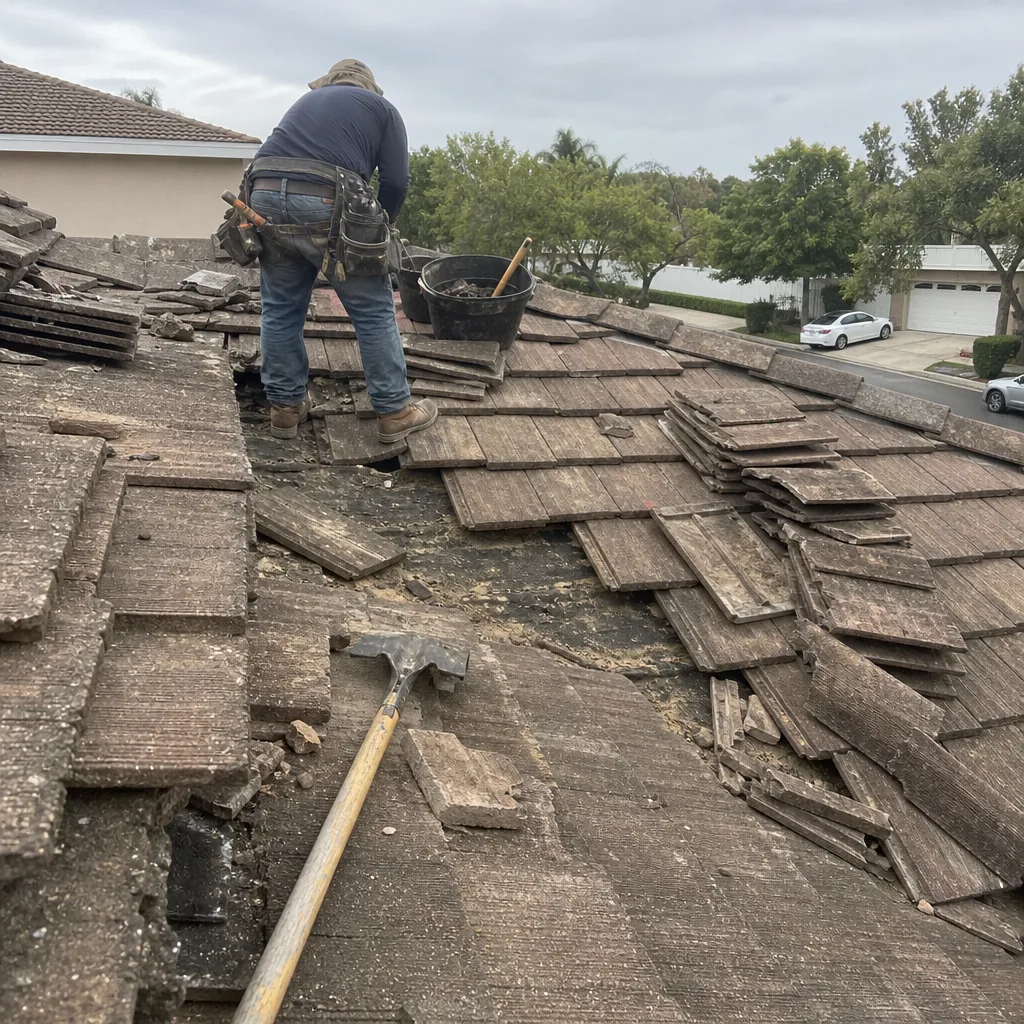
The dominant profile is Spanish tile over a sloped roof deck. Tile holds up well to straight-line wind but fails in specific ways: edge tiles break loose first, ridge caps follow, and vibration from wind gusts can crack tiles across large sections. When a tile roof fails in Aliso Viejo, it tends to fail in broad areas, not isolated spots – which means the tarp must cover a larger footprint.
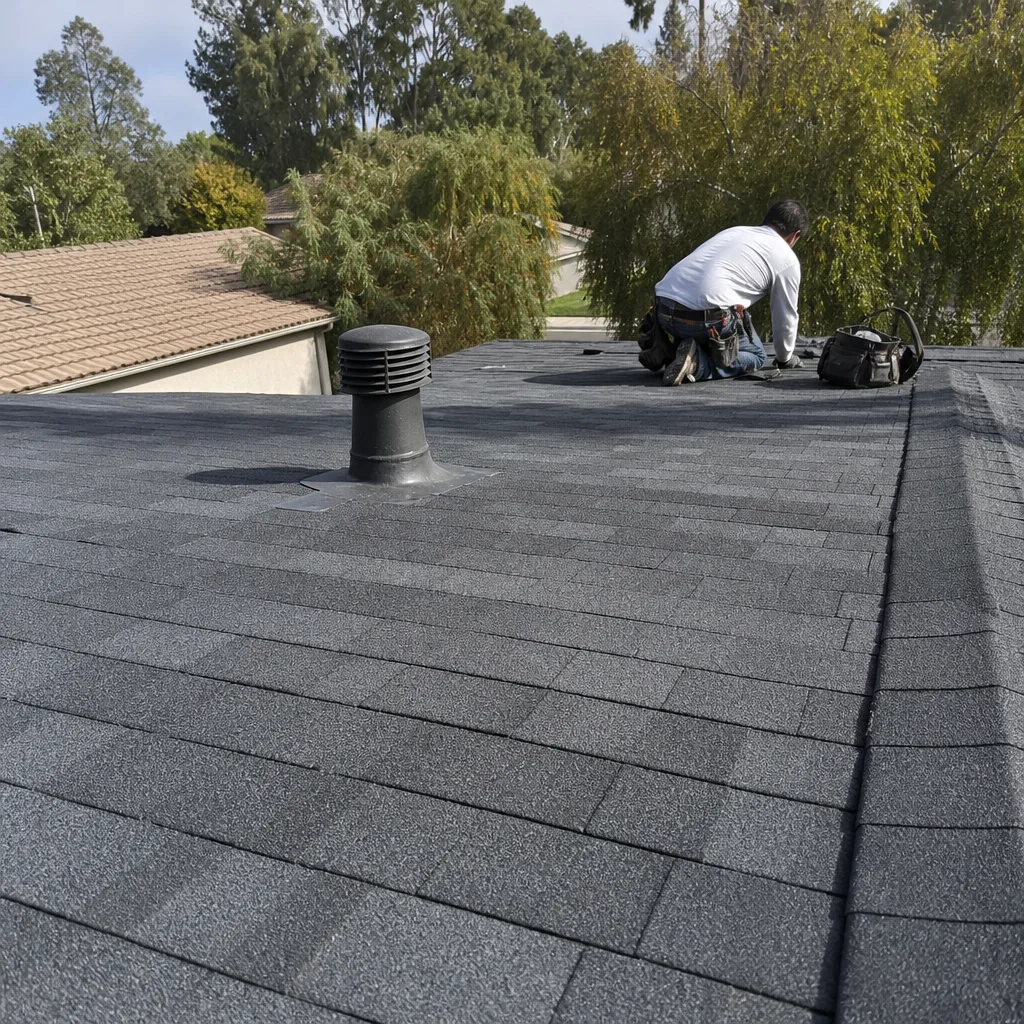
Dimensional asphalt shingle roofs, common on the newer hillside tracts, respond differently. Wind strips individual shingles starting at the corners and edges. The damage pattern looks random, but it follows the wind’s path across the roof. A repair after wind damage on a shingle roof in Aliso Viejo is usually a focused fix, not a replacement – unless the shingles have reached the end of their service life, in which case spot repair is chasing the problem rather than solving it. We carry full lines from Roof Replacement in Aliso Viejo materials, including Atlas and IKO, to match existing profiles when only sections need replacing.
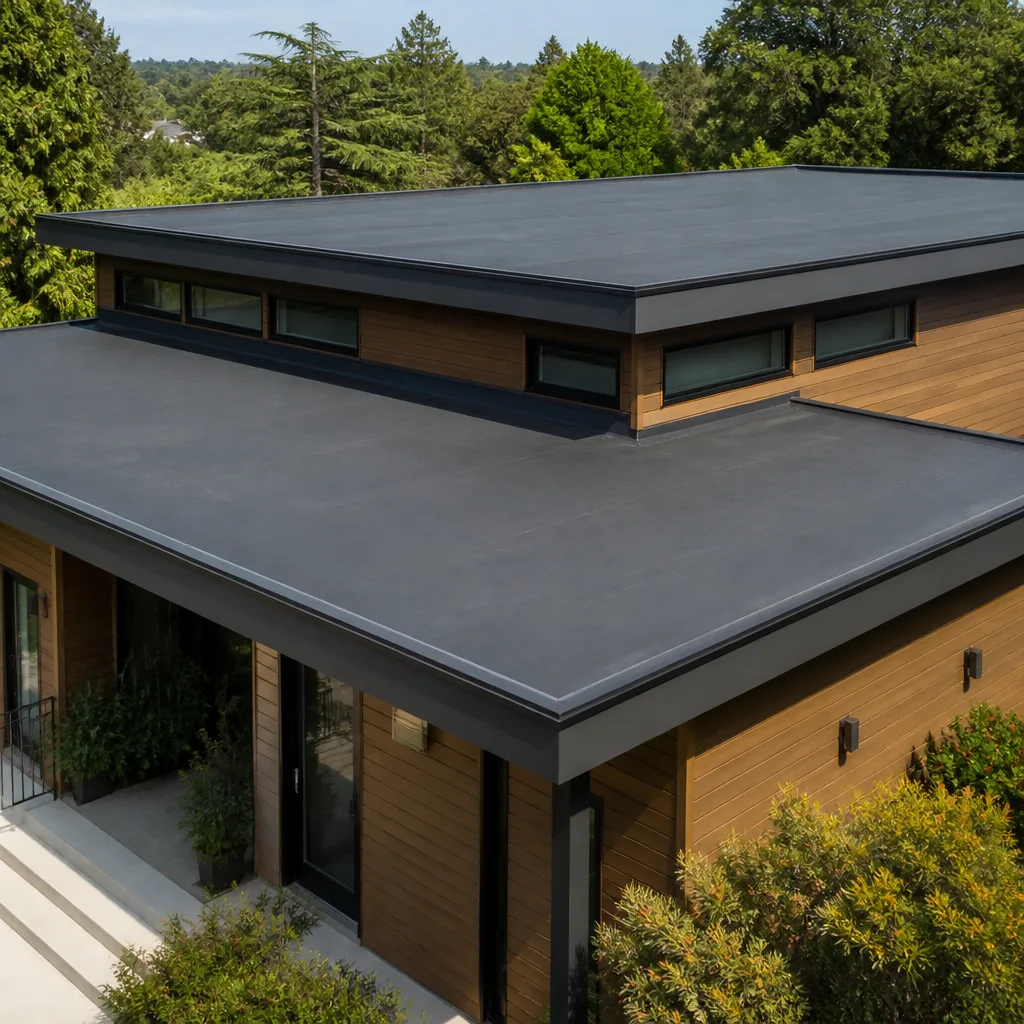
Flat and low-slope sections – outdoor patios, bonus-room additions, some contemporary builds – are the most leak-prone roofs in Aliso Viejo because water does not run off them quickly. After any heavy rain event, low-slope roofs develop hidden water pooling that damages the membrane over weeks, not hours. The leak appears long after the storm. That is why we tell homeowners with any low-slope section to check ceiling surfaces during the week following a rain event, not just during it.
The Emergency Supplies Kit Every Aliso Viejo Homeowner Should Have
We have written this guide around decisions and process, but the physical supplies matter too. Here is the complete kit we recommend for any Aliso Viejo home, assembled for under $150 and stored in the garage.
- One 20×30 heavy-duty poly tarp. Look for a minimum 10-mil thickness with reinforced grommets. Blue tarps are fine for day one; silver tarps hold up better to extended UV exposure.
- Ten furring strips. Eight-foot lengths, 1×2 or 1×3 nominal. Pressure-treated when available.
- One box of 2½-inch exterior-grade screws. Screws hold furring strips better than nails in wind. A cordless drill with a charged battery lives near the kit.
- One roll of waterproof seam tape. For patching small punctures and sealing tarp seams. Flex-seal style tapes are adequate for temporary use.
- Roofing nails. One box of 1¼-inch galvanized nails. Use only as last-resort anchors when screws cannot penetrate decking.
- Builder’s plastic sheeting. A 10×25 roll of 6-mil polyethylene for interior water containment.
- Two buckets and a wet-dry vacuum. You probably have the buckets. The vacuum is the upgrade that saves hours of floor-drying labor.
- Work gloves with grip. Wet roofing materials are slippery. Proper gloves reduce the drop risk while positioning tarp sections.
The kit is not a substitute for professional response – it is insurance against the gap between emergency and crew arrival. In Aliso Viejo, that gap is usually hours, not days, when you already have a contractor relationship. But when a Santa Ana event hits every neighborhood at once, response times stretch, and the kit earns its place on the shelf.
Common Mistakes to Avoid
- Calling the insurance company first. Once a claim is opened, adjusters start assessing from a script. Getting a contractor assessment first gives you facts to counter being lowballed, and in Aliso Viejo, we see this mistake weekly during storm season.
- Standing on a wet tile roof to tarp it. Wet tile and wet underlayment produce a surface like ice. The number of homeowner falls we hear about during storm response is directly tied to this single decision.
- Ignoring small leaks because “it stopped dripping.” A leak stops when water saturation equalizes – it does not mean the water path closed. Water trapped in Aliso Viejo roof decks continues damaging structure for months afterward.
- Paying a door-knocker cash before work starts. The most common roofing scam pattern in Orange County follows a simple rhythm: cash deposit, one day of partial work, no return. Legitimate contractors do not need cash.
- Forgetting to document the sky and weather conditions. Insurance adjusters look for reasons to call damage pre-existing. Bad-weather photos are time-stamped evidence that the event occurred.
- Delaying a full inspection after tarping. The tarp stops water. It does not assess structural damage. Every tarped roof in Aliso Viejo should be professionally inspected within the week – moisture trapped under a tarp creates its own problems.
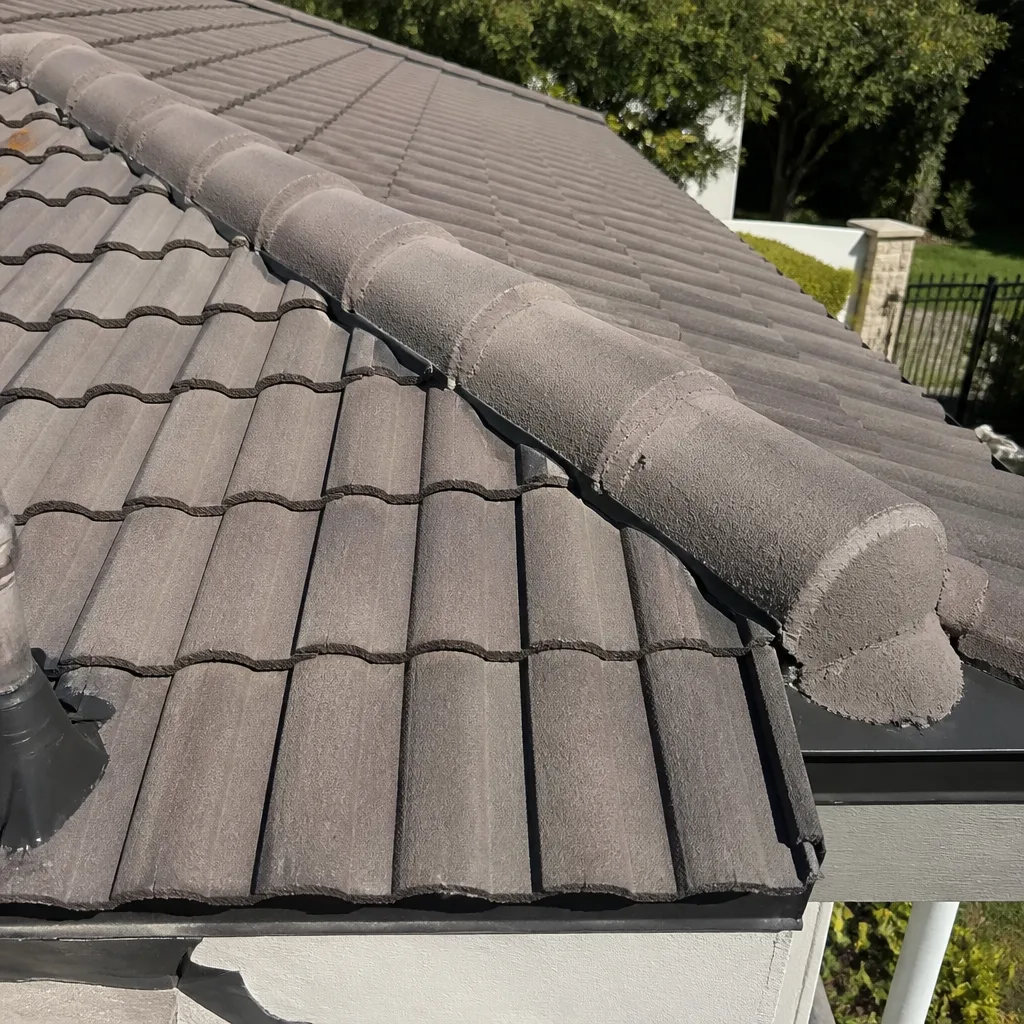
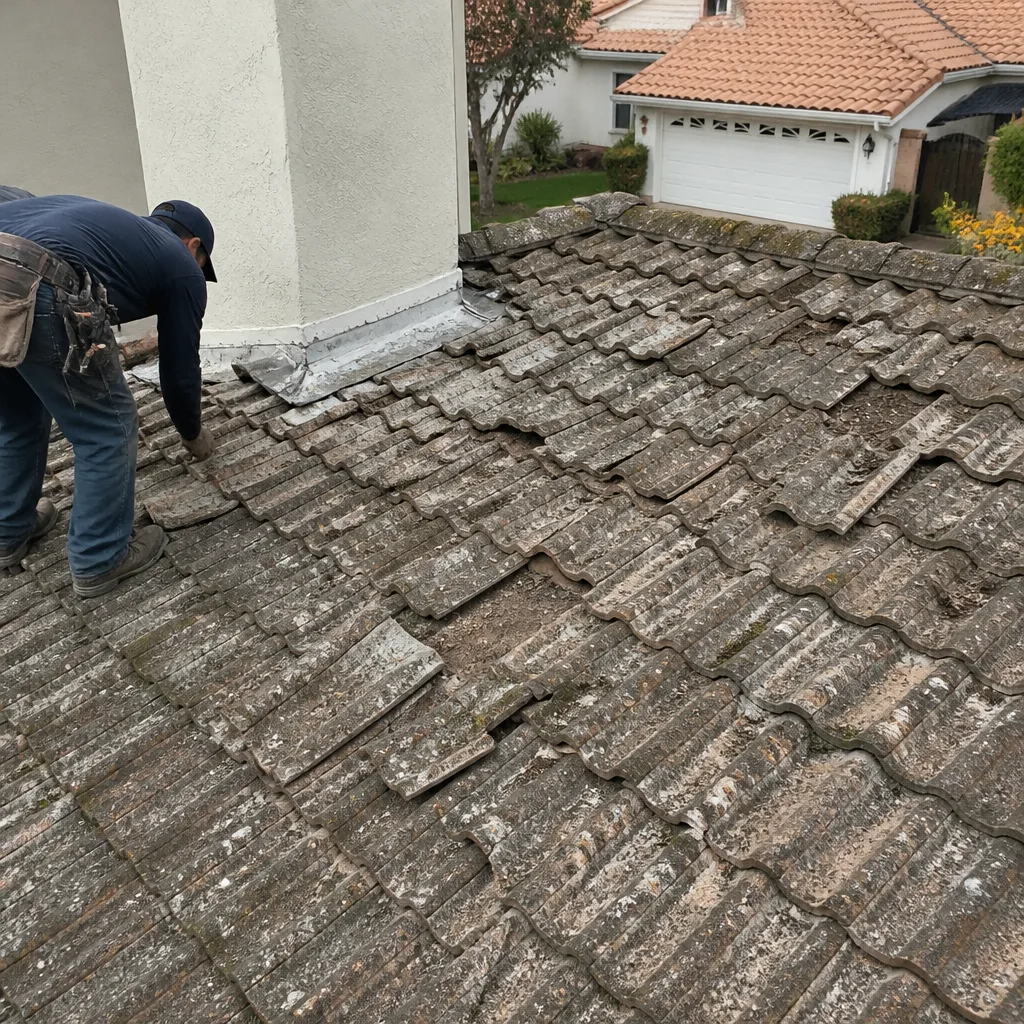
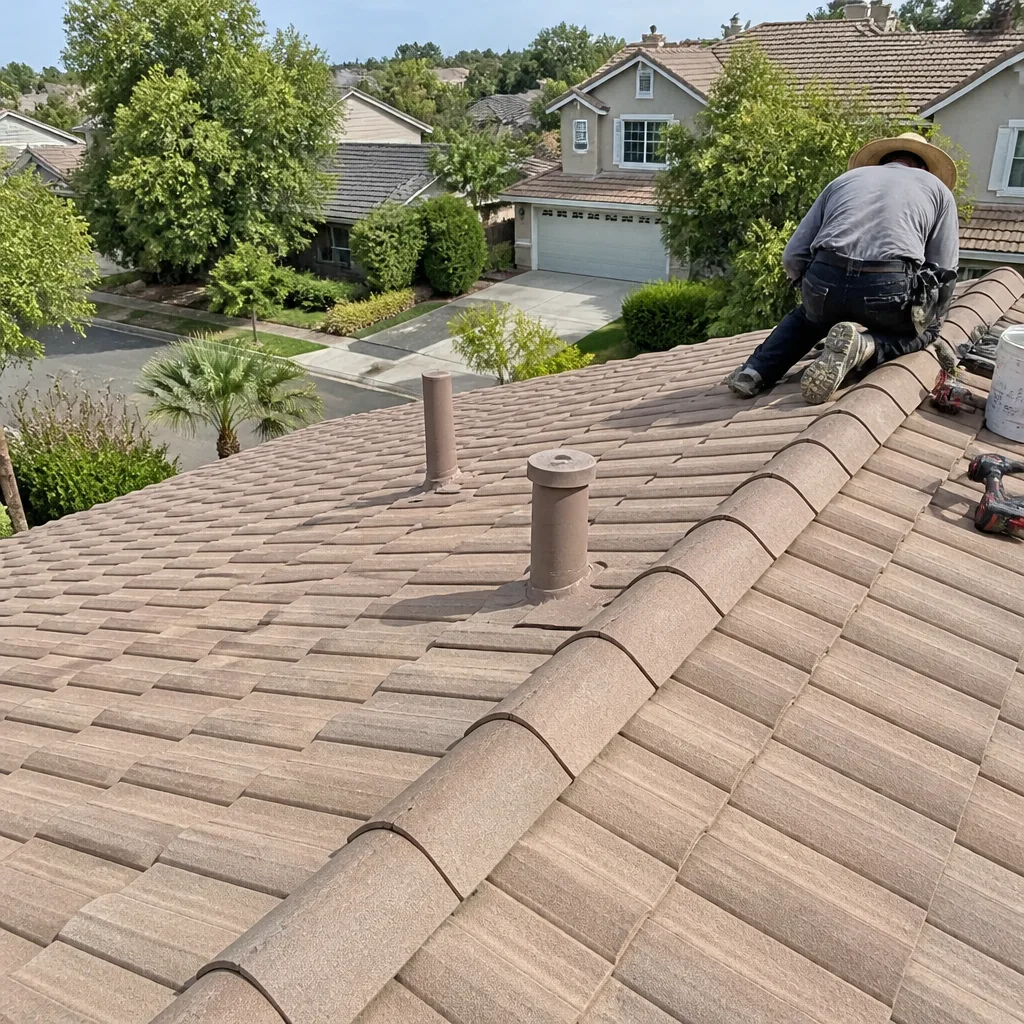
See the difference
 Before
 After
 Before
 After
 Before
 After
When to Call a Professional
Some roofing emergencies are obvious: water cascading through the ceiling, a tree on the roof, a hole visible from the ground. But the less dramatic scenarios are where homeowners lose money by waiting. If you see any of the following, call a professional immediately rather than watching the problem develop:
- Water stains appearing on ceilings or walls after rain – this means water has passed through the deck, and the underside damage is already underway.
- Shingles or tiles on the ground after a wind event – roof fastening has failed, and more will follow.
- Attic daylight visible through the roof deck – that opening admits wind, water, and embers.
- Sagging in any roof section – this is a structural warning, not a surface warning.
- Wet insulation in the attic – trapped moisture against the deck begins the slow rot that turns a $1,500 repair into a $25,000 section replacement.
Captain Roof Repair offers free estimates in Aliso Viejo – call (844) 717-4930. We’ll tell you exactly what your roof needs – and why. And we’ll do it before the adjuster shows up, because the order of those conversations determines how the claim goes. From the first inspection to the final shingle, we take command of the problem so you don’t have to.
Frequently Asked Questions
A roofing emergency is any condition where water, wind, or fire threat is actively entering or about to enter the home envelope: active leaks, missing sections of shingles or tiles, tree impacts, lifted ridge caps, or visible deck exposure. If water is coming inside, it’s an emergency. Call (844) 717-4930 if you’re not sure – we’ll walk you through the assessment before anyone climbs a ladder.
Emergency tarping alone typically runs $300 to $600, and the repair itself depends on what the storm exposed. A focused shingle repair runs $400 to $1,200. A tile section replacement runs $800 to $2,500. A full roof replacement after major wind damage runs $12,000 to $28,000 depending on the material. Call (844) 717-4930 for a line-item quote on your exact scope – estimates are free.
Only tarp a roof yourself if it is a single-story, low-slope section and you have a second person on the ground. Tile roofs, steep pitches, wet conditions, or working alone all raise the fall risk beyond what the water damage is worth. In those cases, call a professional crew – the tarp will be anchored correctly and you stay off the injured list.
Most Aliso Viejo homeowner policies cover wind damage as a named or included peril, but the claim’s outcome hinges on documentation and wording. The dated photo record of your roof’s pre-storm condition is the single strongest piece of evidence. Get the damage assessed by a contractor before the adjuster walks the property – the facts give you leverage.
A properly anchored tarp holds for 30 to 60 days in Aliso Viejo’s climate. Beyond that, UV breakdown and wind stress begin to weaken the anchors, and moisture trapped underneath becomes a new problem. We recommend scheduling the permanent repair within two weeks of the emergency, sooner if rain is forecast.
We respond to emergency calls seven days a week, including evening assessments after wind events. Night tarping on steep sections is deferred until daylight for safety, but we can secure the interior and document damage the same night. Call (844) 717-4930 and we’ll tell you straight what’s possible and what has to wait until morning.
The Bottom Line
Roofing emergencies in Aliso Viejo reward the prepared. The three decisions that matter most – knowing your contractor, documenting your roof, and stocking basic weatherproofing supplies – cost almost nothing and determine whether an emergency becomes a story you tell for years or a repair bill you feel for longer. The sequence after damage is equally critical: secure the interior, document everything, tarp if safe, call the contractor before the insurance company, and evaluate door-to-door offers with skepticism. Captain Roof Repair home is one call away, and we answer the phone before the storm season does. We carry seven leading brands, including Owens Corning and CertainTeed, so the material matches your roof – not our supplier. The right material for your roof – not for our supplier. Seven leading brands. One crew that knows them all.
Written by the team at Captain Roof Repair, serving Aliso Viejo since 2017. Browse more guides & resources on protecting your home.